Krawędzie pamięci: Dniepr – odkrywanie wyobrażonego, symbolicznego i rzeczywistego
Experimental Studio Dnipro Center for Contemporary Culture (rezydencja artystyczna zrealizowana ze wsparciem finansowym programu Culture Moves Europe)
/ Edges of Memory: Dnipro – Unveiling the Imagined, Symbolic, and Real
Experimental Studio Dnipro Center for Contemporary Culture (art in residence supported by the Culture Moves Europe program)
Experimental Studio Dnipro Center for Contemporary Culture (rezydencja artystyczna zrealizowana ze wsparciem finansowym programu Culture Moves Europe)
/ Edges of Memory: Dnipro – Unveiling the Imagined, Symbolic, and Real
Experimental Studio Dnipro Center for Contemporary Culture (art in residence supported by the Culture Moves Europe program)
The exhibition "Edges of Memory: Dnipro" is a site-specific intermedia project that explores the complex relationship between memory, trauma, and the city's experience under wartime conditions. It was created during my artistic residency at the Dnipro Center for Contemporary Culture, with the support of the Culture Moves Europe program. The exhibition constitutes a reflective cartography of the city as a topography of absence, transformation, and spectral presence. The project is rooted in Jacques Lacan's triad: the Imaginary, the Symbolic, and the Real, while also drawing on affect theory, sound studies, and postcolonial spatial critique.
Dnipro appears here as a post-industrial and post-imperial city, marked by the legacy of Soviet colonization of space and re-examined through acts of resistance, care, and performative remembrance. Conceptually, I use Lacan's triad as a tool for analyzing urban memory. The Imaginary is the space of narcissistic projections, illusions of identity. The Symbolic constitutes the cultural code and language of narrative. Real is that which escapes representation, whose presence wounds, tears itself from signs. Real is the raw residue of experience, impossible to capture in any image or story fully. Dnipro presents itself as a city of Real: its trauma cannot be fully narrated, its wounds — even spatial ones — remain silent. As Marianne Hirsch writes in the context of post-memory, we inherit not only memories but also their absence, their echo, and their shadow. This kind of memory becomes spectral — and it is in this spectral mode that my exhibition operates.
In the project, I avoid linear narratives — I build an emotional archive composed of fragments, voids, and afterimages. The works do not represent the city — they resonate with it, preserving its ruptures, its pulse, and its silences. "Edges of Memory: Dnipro" is a project born out of fragility and resonance. The exhibition does not tell the story of Dnipro — it attunes itself to its vanishing pulse. Between ruin and resistance, composed of fragments, ellipses, and remnants, it becomes an emotional excavation that searches for presence in what has nearly disappeared.
As part of my artistic residency at the Dnipro Center for Contemporary Culture — supported by Culture Moves Europe — I immersed myself in a city suspended between worlds: post-imperial, post-Soviet, post-industrial, and now under constant threat of war. I wanted to capture not the image of the city, but its affect, its fatigue, tremor, and unsaid.
I am not interested in documentation. I am interested in matters of a trace. Therefore, I work with fragile carriers of memory. Unfired clay breaks, like the words of witnesses that have no one to be passed on to. This is an anti-archive that exists only through its vulnerability to destruction. Salt has a dual nature: it preserves and dissolves. In it, I suspend fragments of everyday life, extracted from ruins — they slowly crystallize. Here, memory is not something permanent — it is a biological, almost organic, fleeting process. The digital pixel becomes a new grain of truth, but blurred, suspended between what exists and what has been scanned and lost. As if space itself has been captured by digital entropy. Sound — not image — leads the narrative. In "Landscape of Disappearance," the video reflection of the Dnipro River withdraws in favor of the sound of wind, city noise, and the wail of air raid alerts. I refer here to soundscape studies — especially the concept of acoustic intimacy as a trace of real experience.
I do not want to depict war. I do not want to depict Dnipro. I want to listen to them. My art is not an act of recording, but an act of co-feeling. It is a ritual of presence in the face of absence. Everything in this exhibition — salt, clay, image, sound — yields. And it is precisely this yielding that renders them true.
The exhibition "Edges of Memory" is neither a document nor a monument. It is an affective excavation, a process of listening, recording, and breaking. Materials — salt, clay, pixel, sound — are fragile, mutable, and embodied. Together, they form a counter-archive that speaks through traces, voids, and implications. I do not represent the city — I experience it, I resonate with it, I pass it through myself. My art becomes a tool of empathy toward what is unmourned, what is silenced, what still endures in hiding.
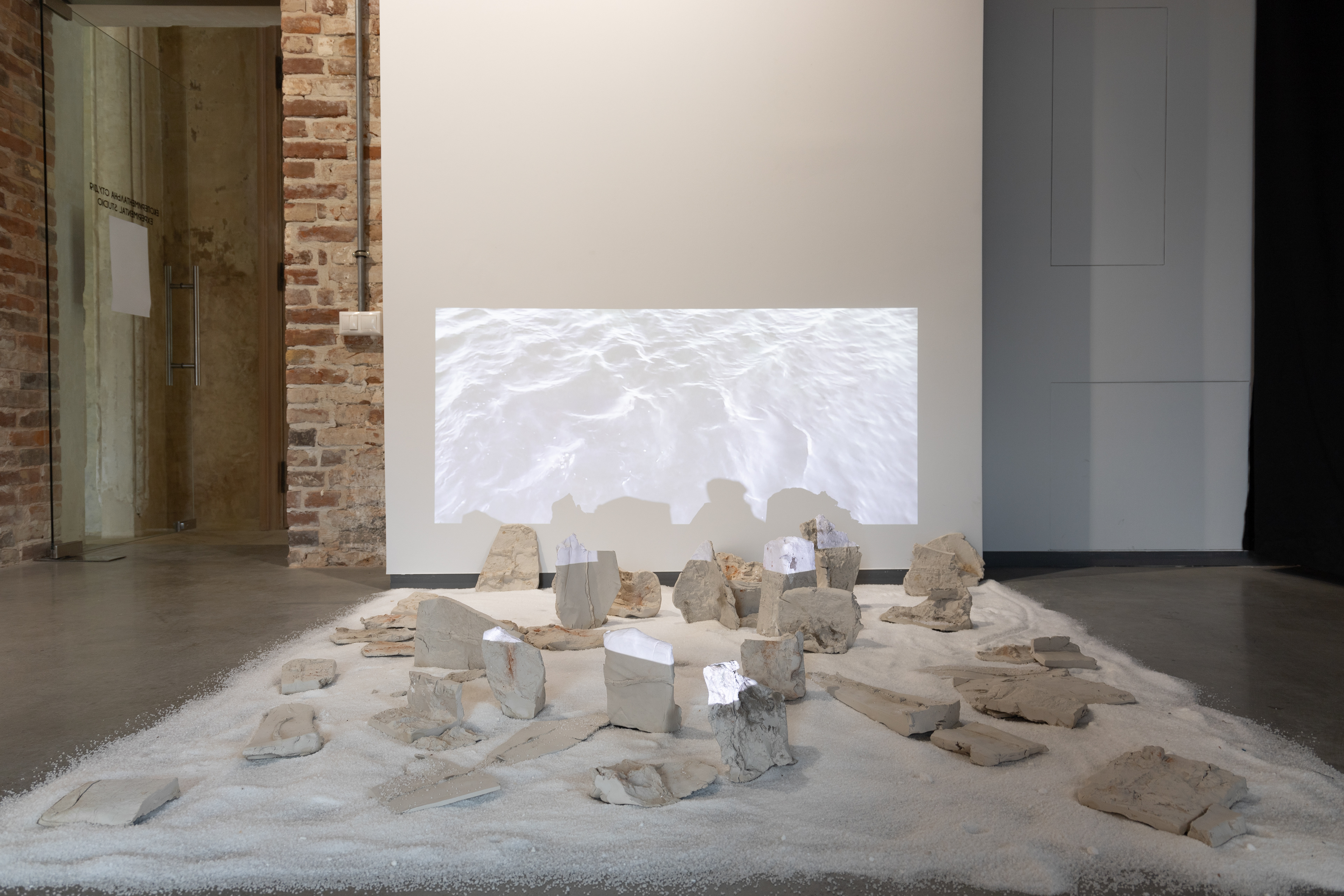
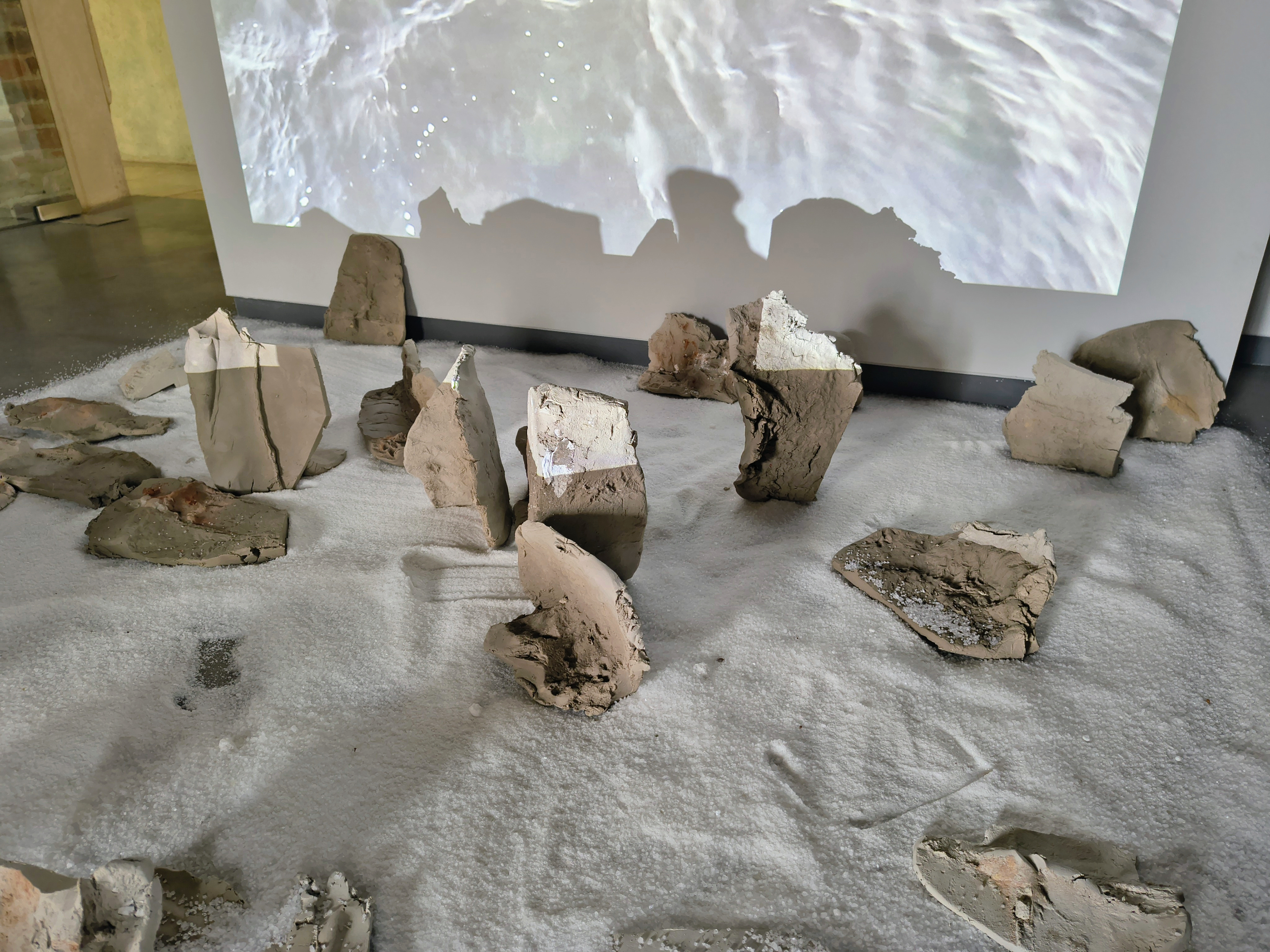
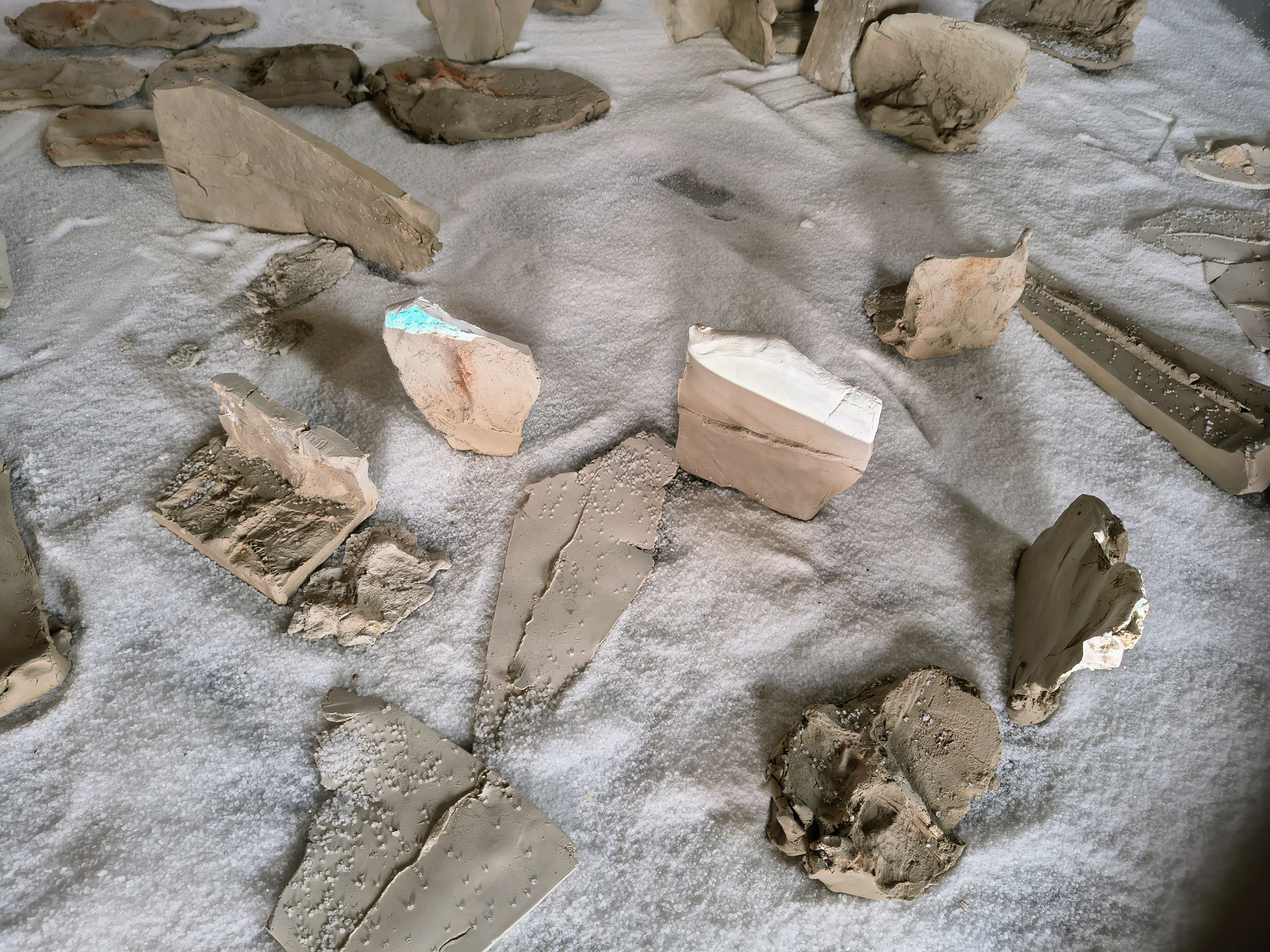
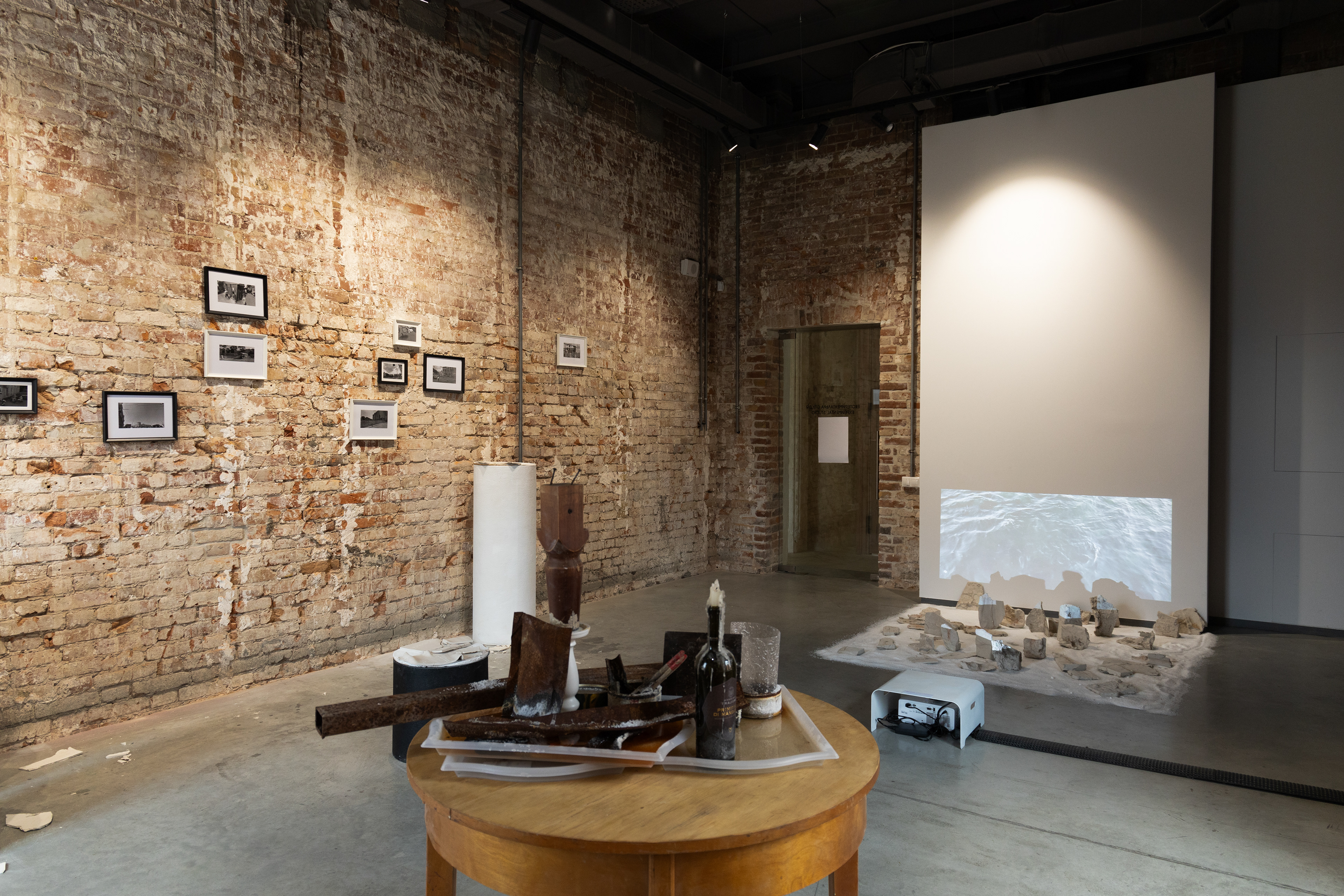
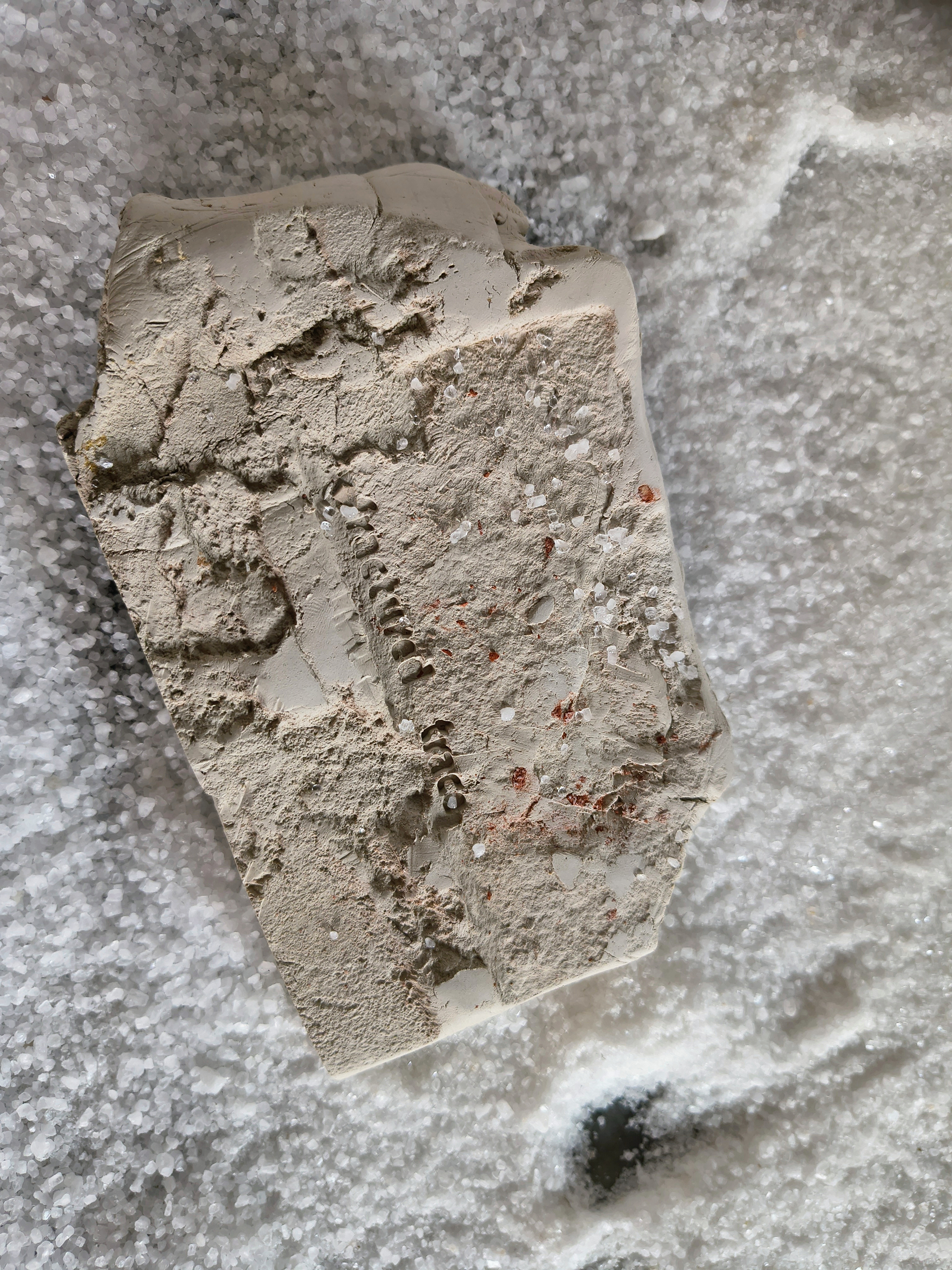
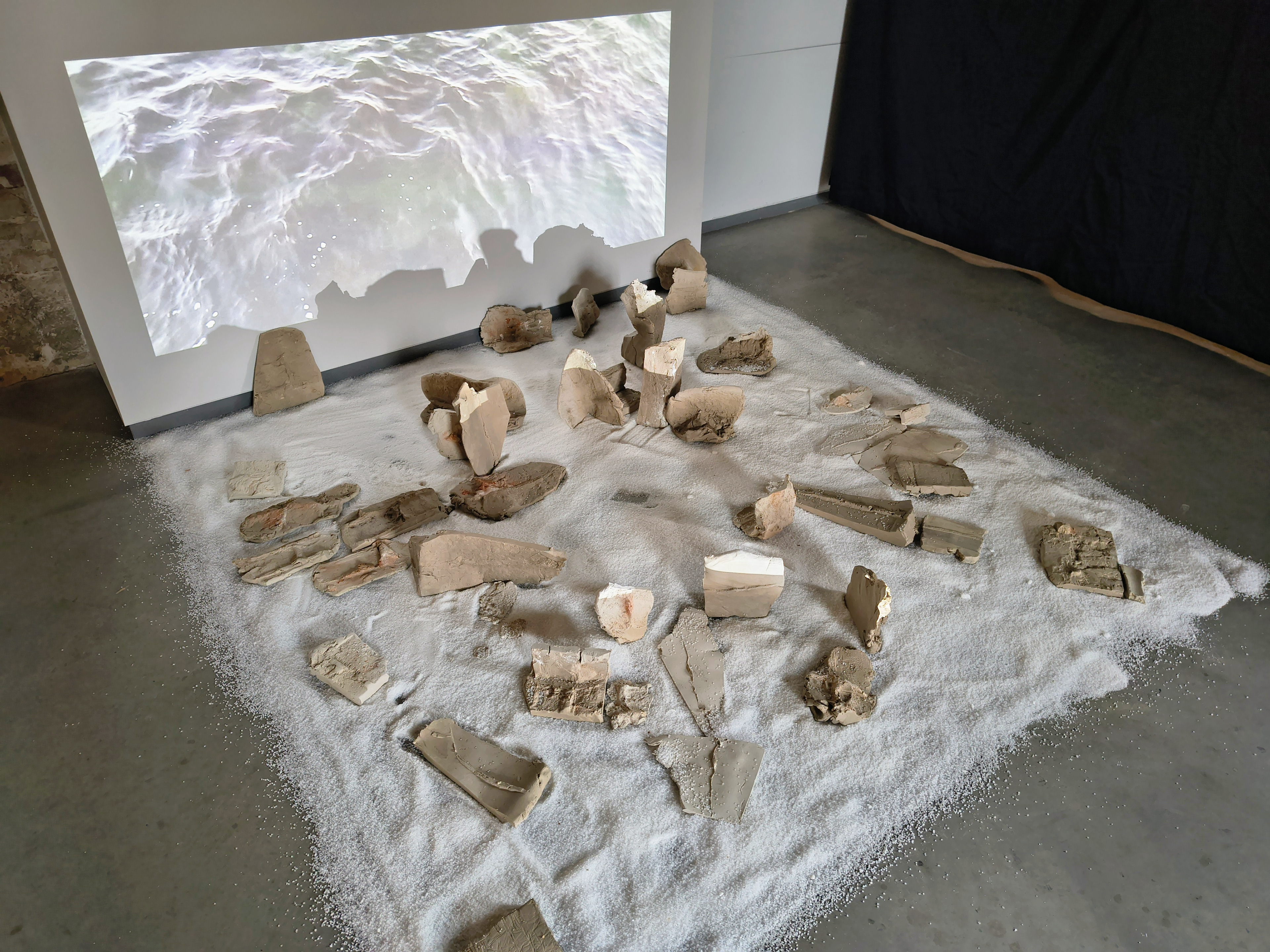
Landscape of Disappearance (2025, environment, video) An attic space filled with salt — on it, unfired ceramic casts of cracks, holes, and voids. A material staging of absence, of emptiness, which Lacan terms "the Real,” that which resists meaning. The video projection shows the surface of the Dnipro River during an air raid alert, and its soundscape combines wind, urban noise, and mounting tension. The installation becomes a ritual of presence in the face of absence, a memory-body constructed of fragility.
The End of the Line Is Not the End (2025, video) A journey through Dnipro’s peripheral transport systems — marshrutkas, trams, buses. There is no destination, only drift. The flâneur’s wandering is stripped of aestheticization — rather, it is a search for the self in a city that cannot be encompassed. Double exposure shatters the continuity of time and space — as if reality were recorded on multiple layers intersecting without axis, without boundary between retreat and advance. Dnipro emerges here as a city of exhaustion. Fatigue — physical, social, infrastructural — is a language that Byung-Chul Han describes as the primary aesthetic of contemporaneity. In this context, my video is not just a journey without a goal — it is an aesthetic of drift, a gesture of rejecting productivity, linearity, and narratives of success.
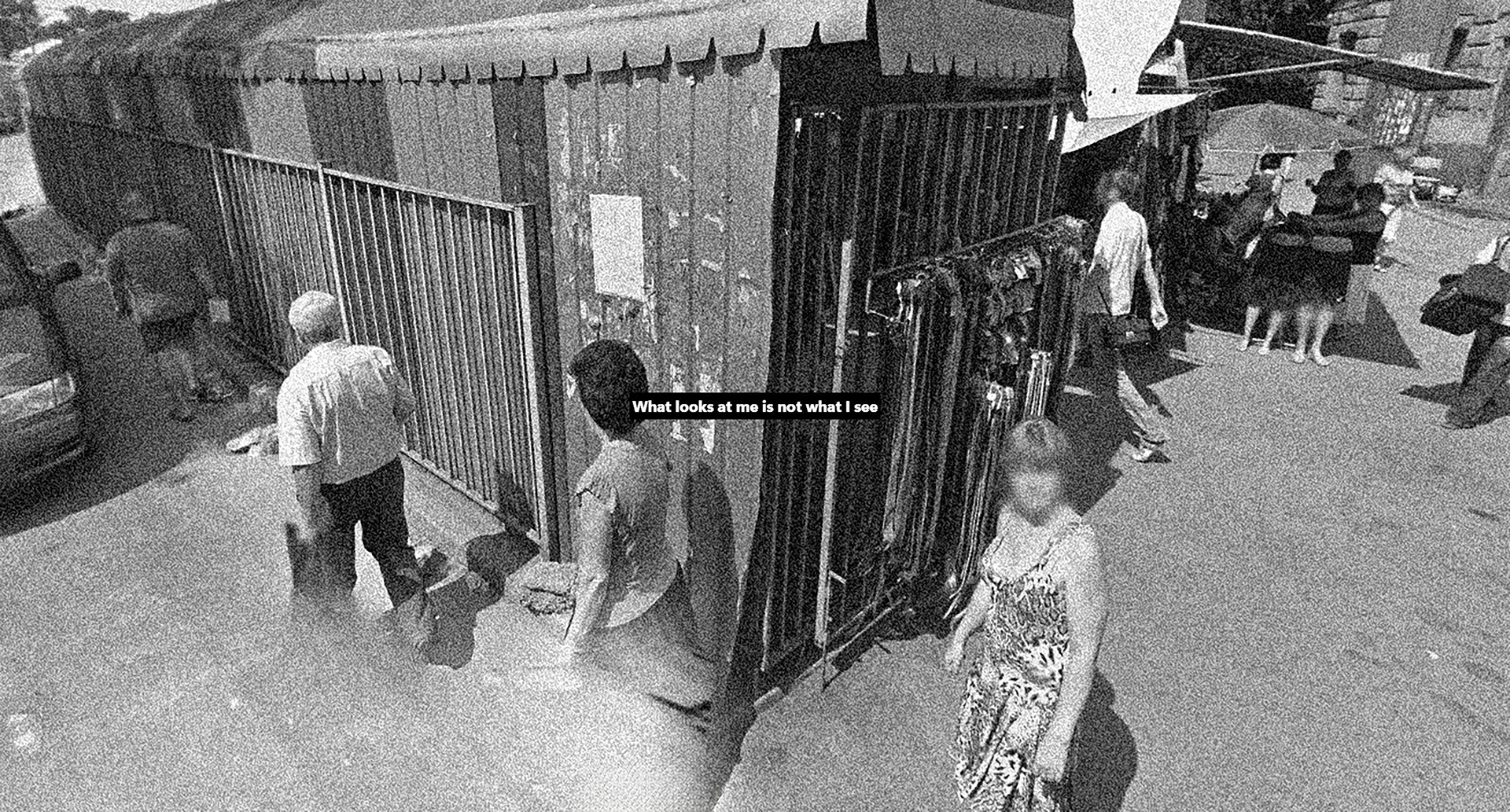
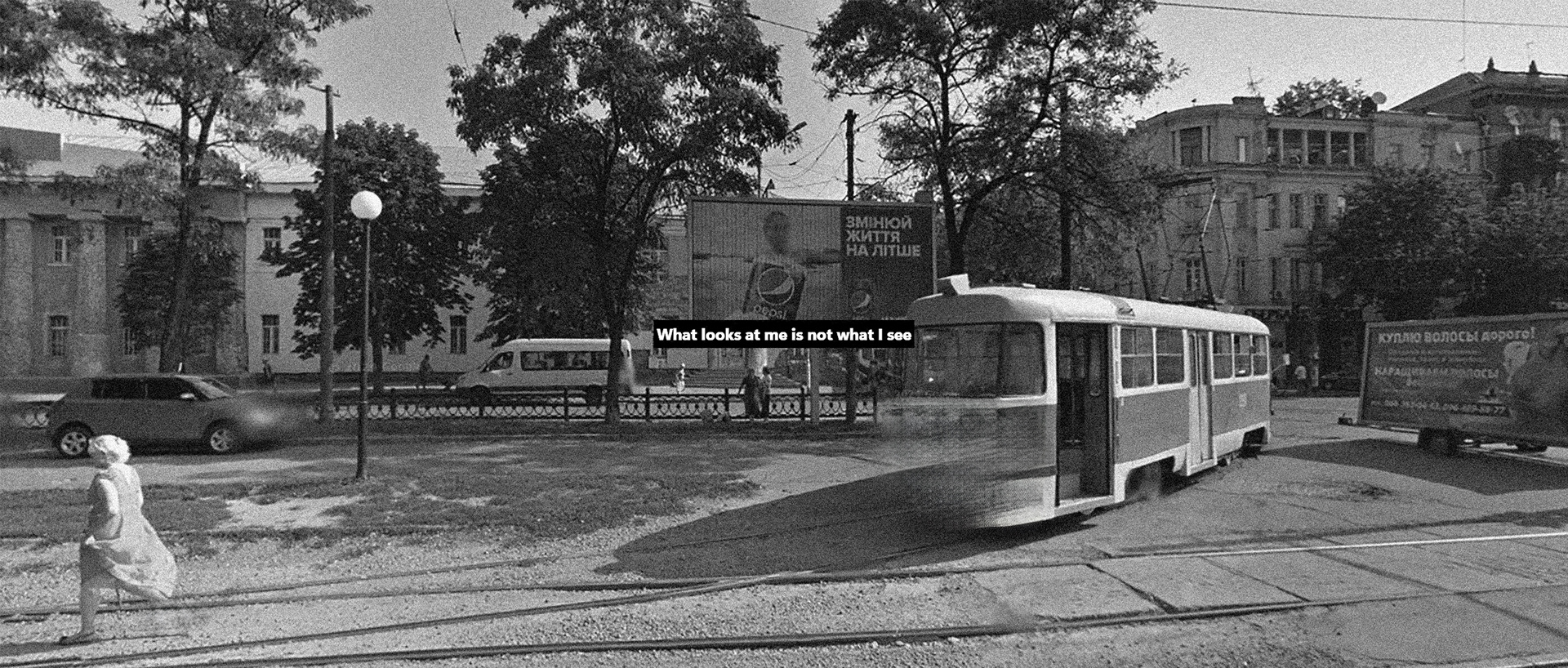
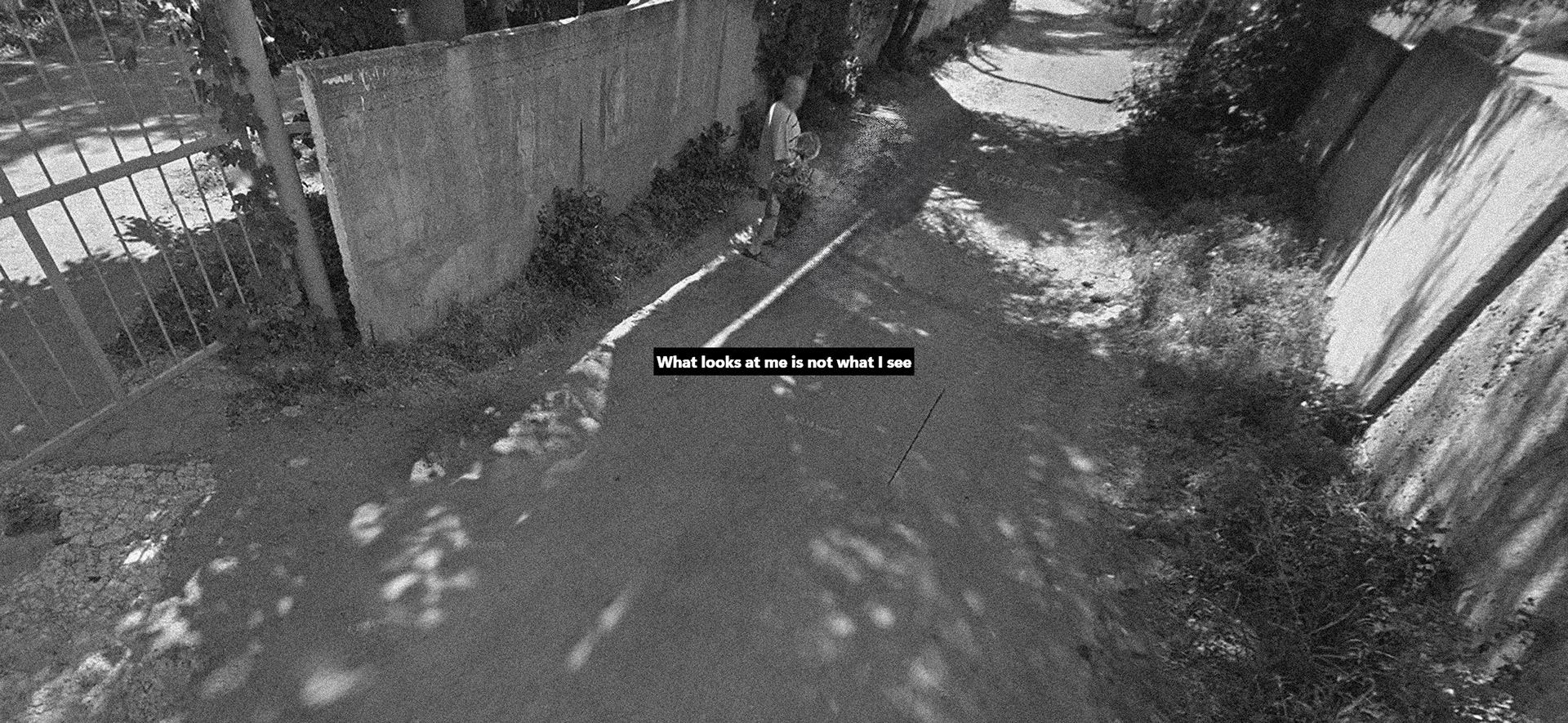
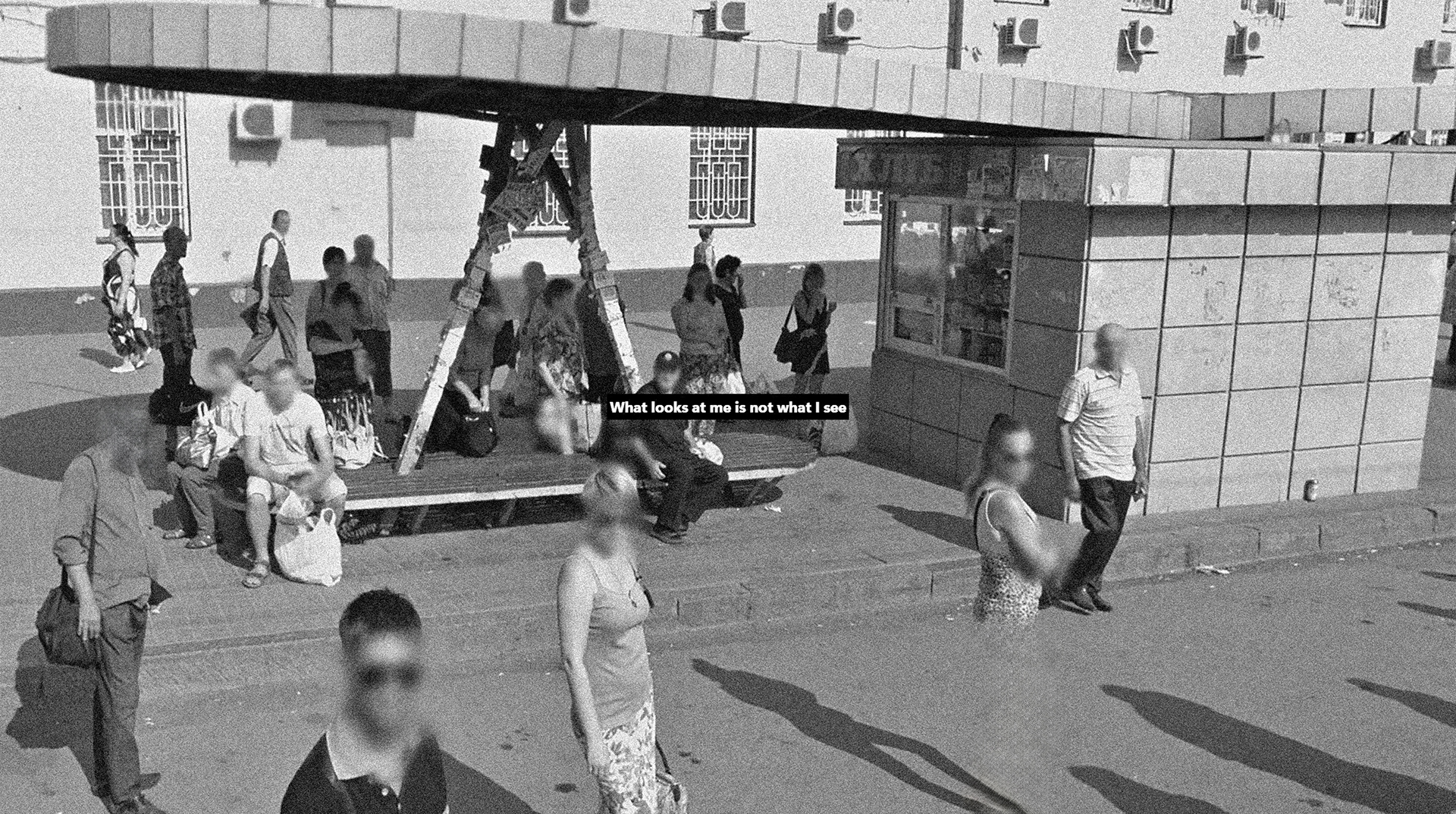
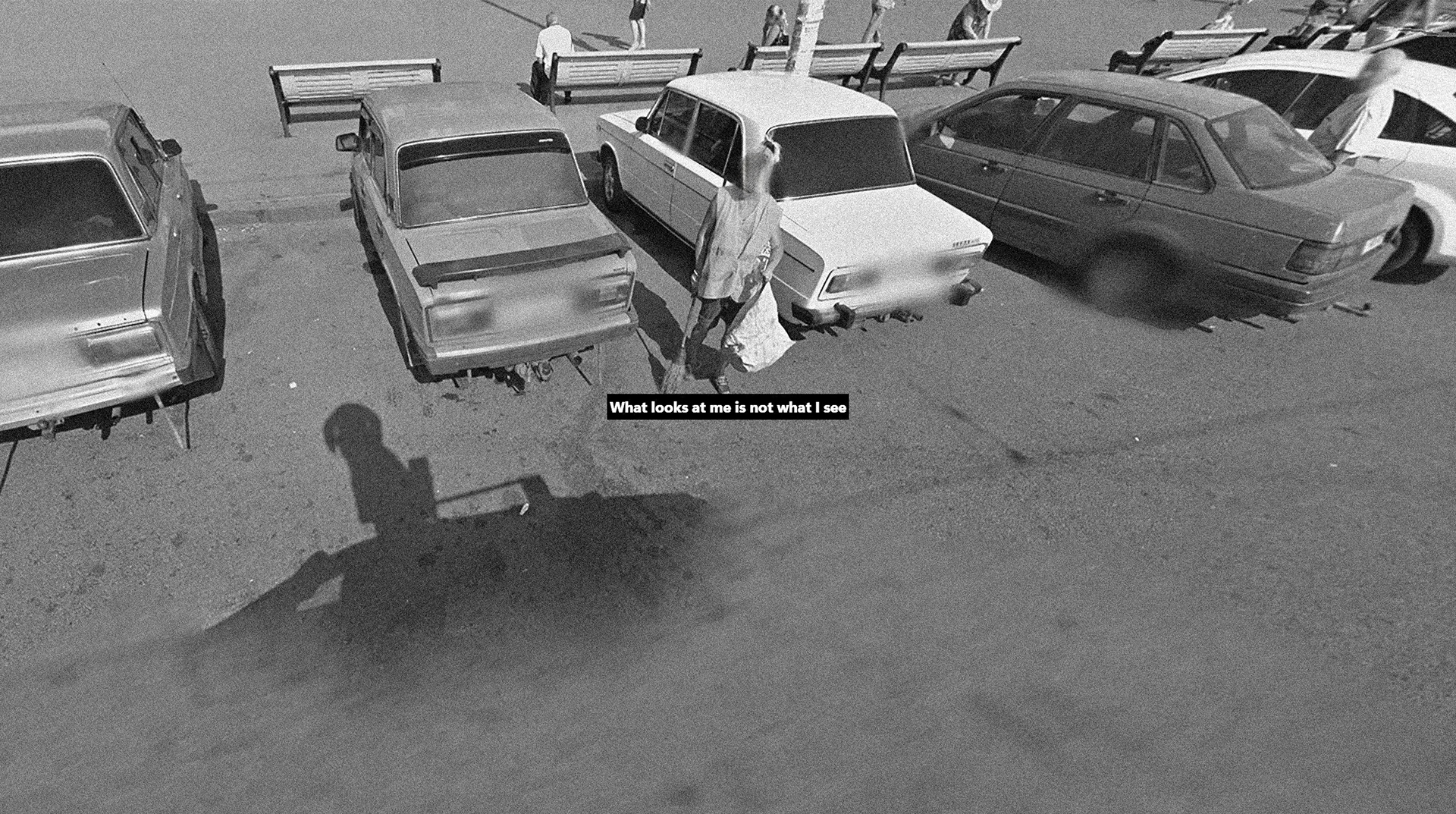
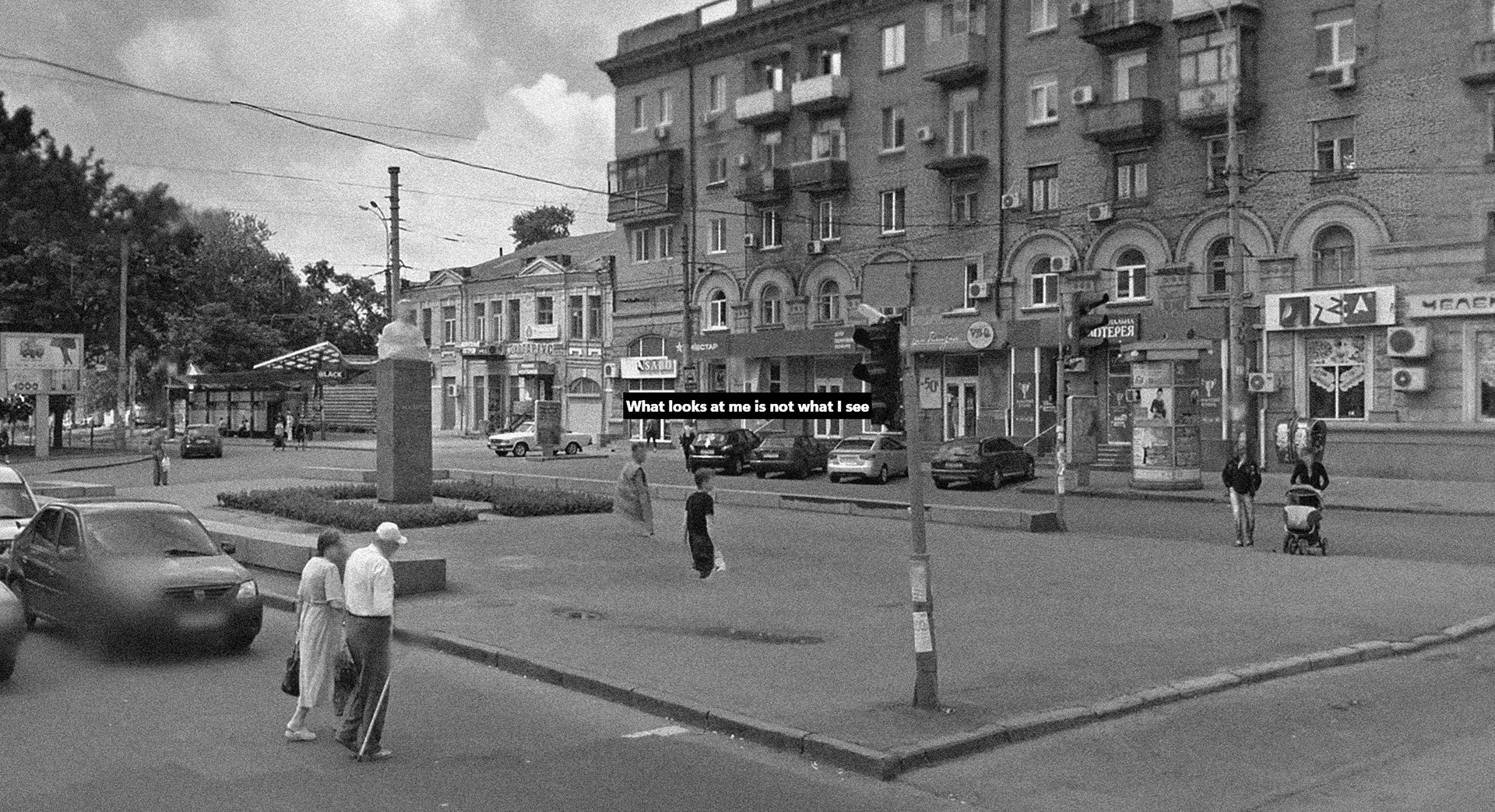
That Which Looks at Me Is Not What I See (2025, video and post-photography). Fragments of Google Street View images (July 2015), buildings stretch, figures blur, objects collapse. A subtle digital intervention destabilizes the status of the document. What work critiques the regime of visibility, in which what is shown is not necessarily true. It records the digital fractures of a vanishing city, the pixelated ghosts of a time once scanned but now disintegrating.



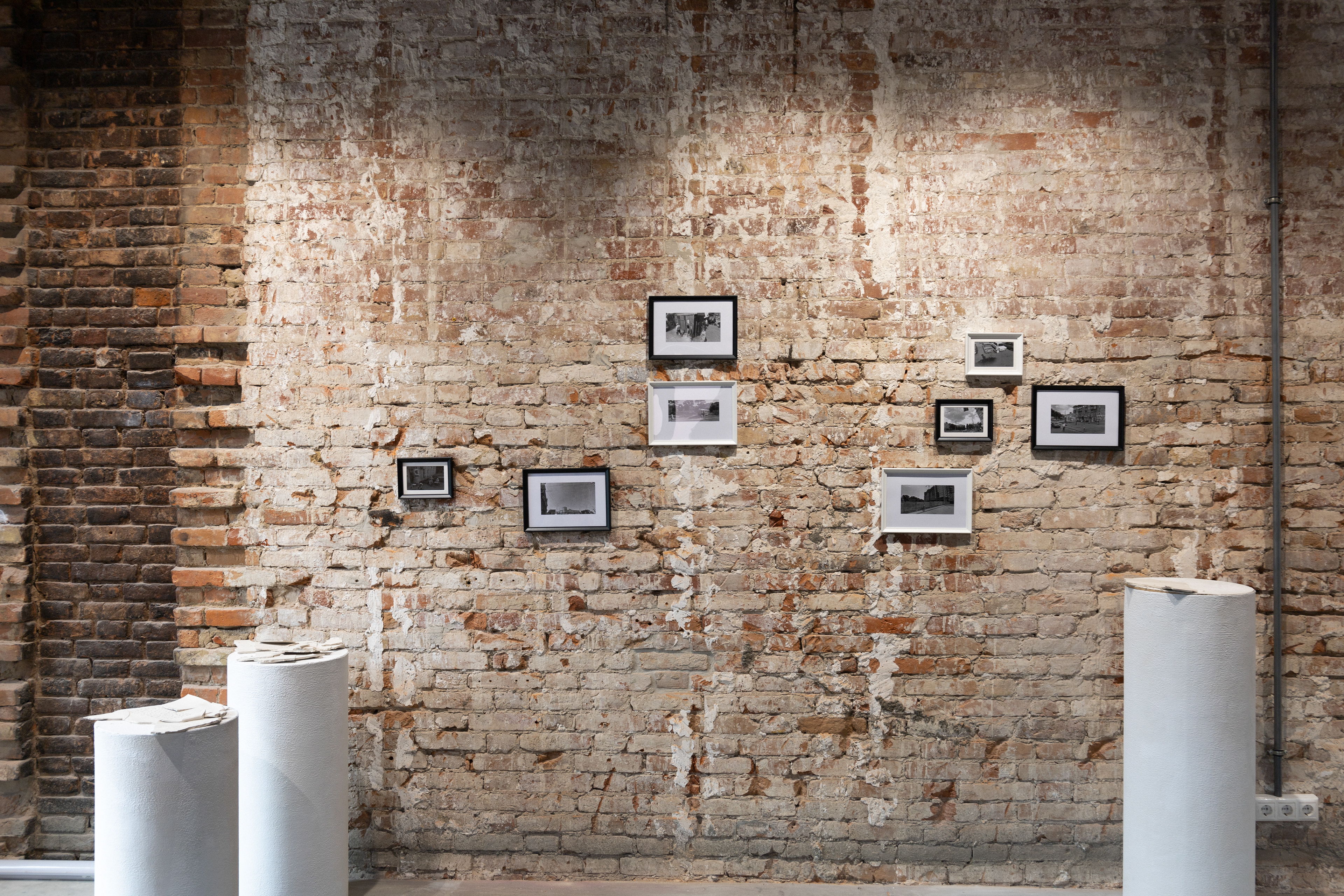
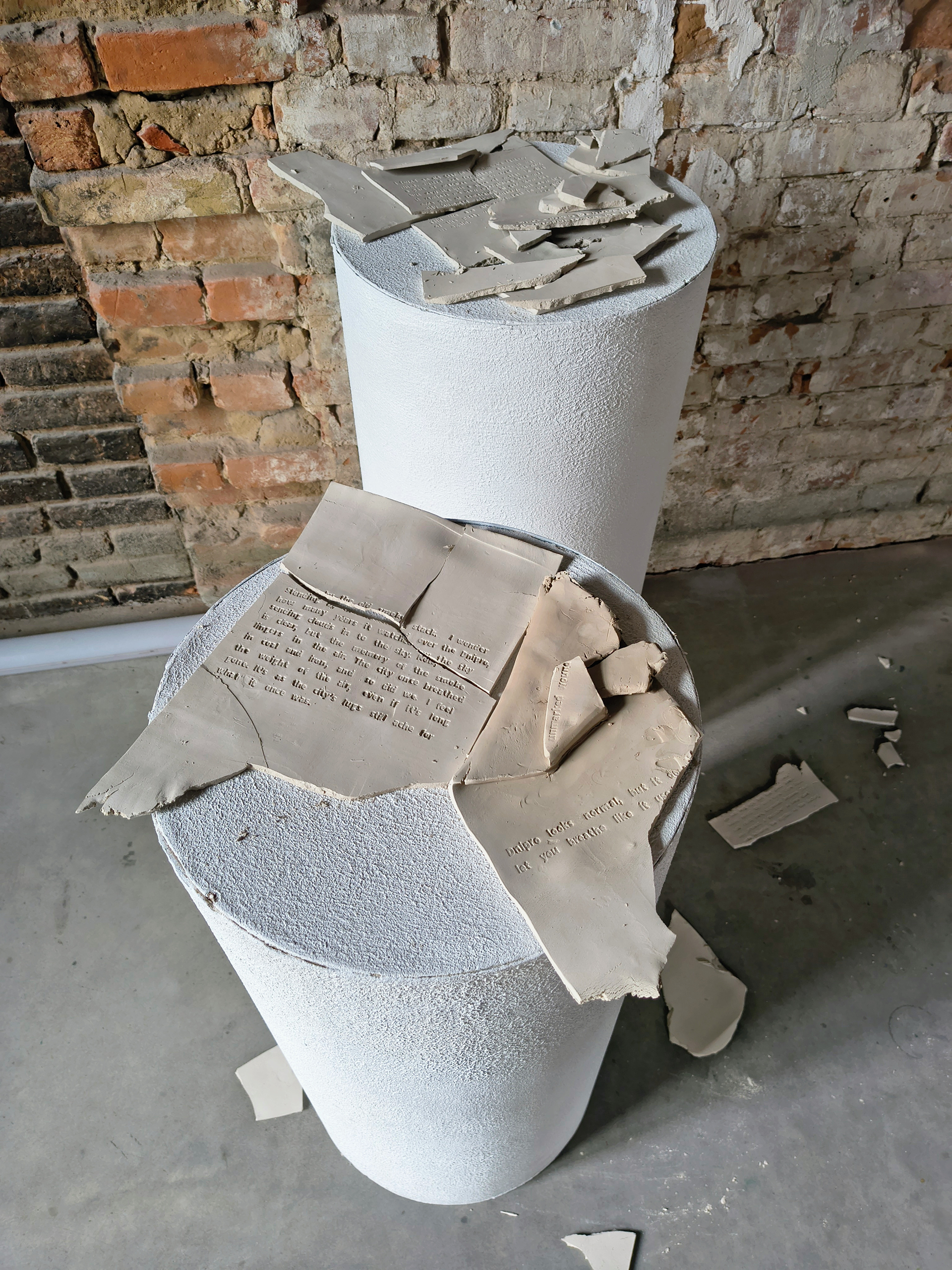
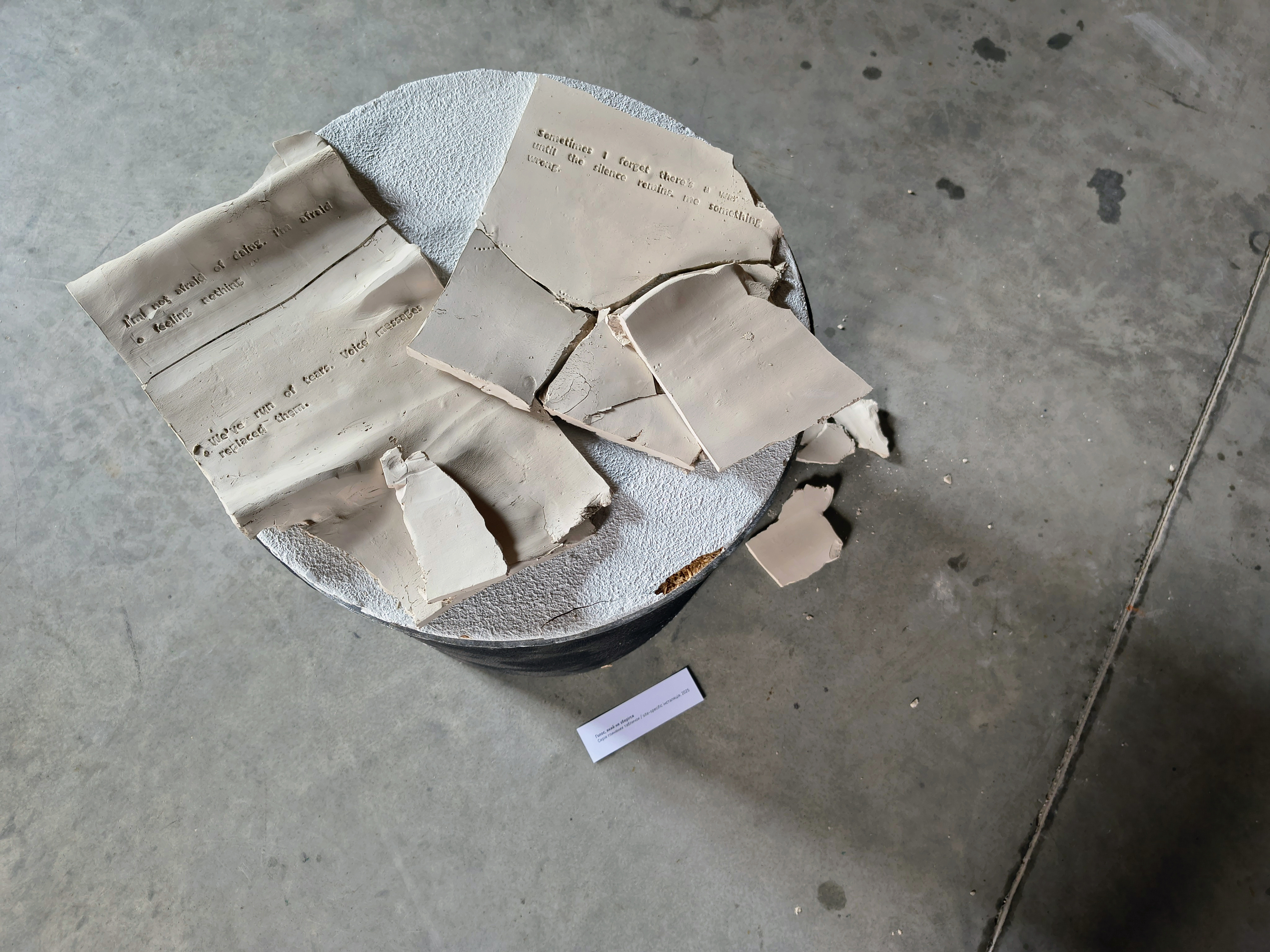
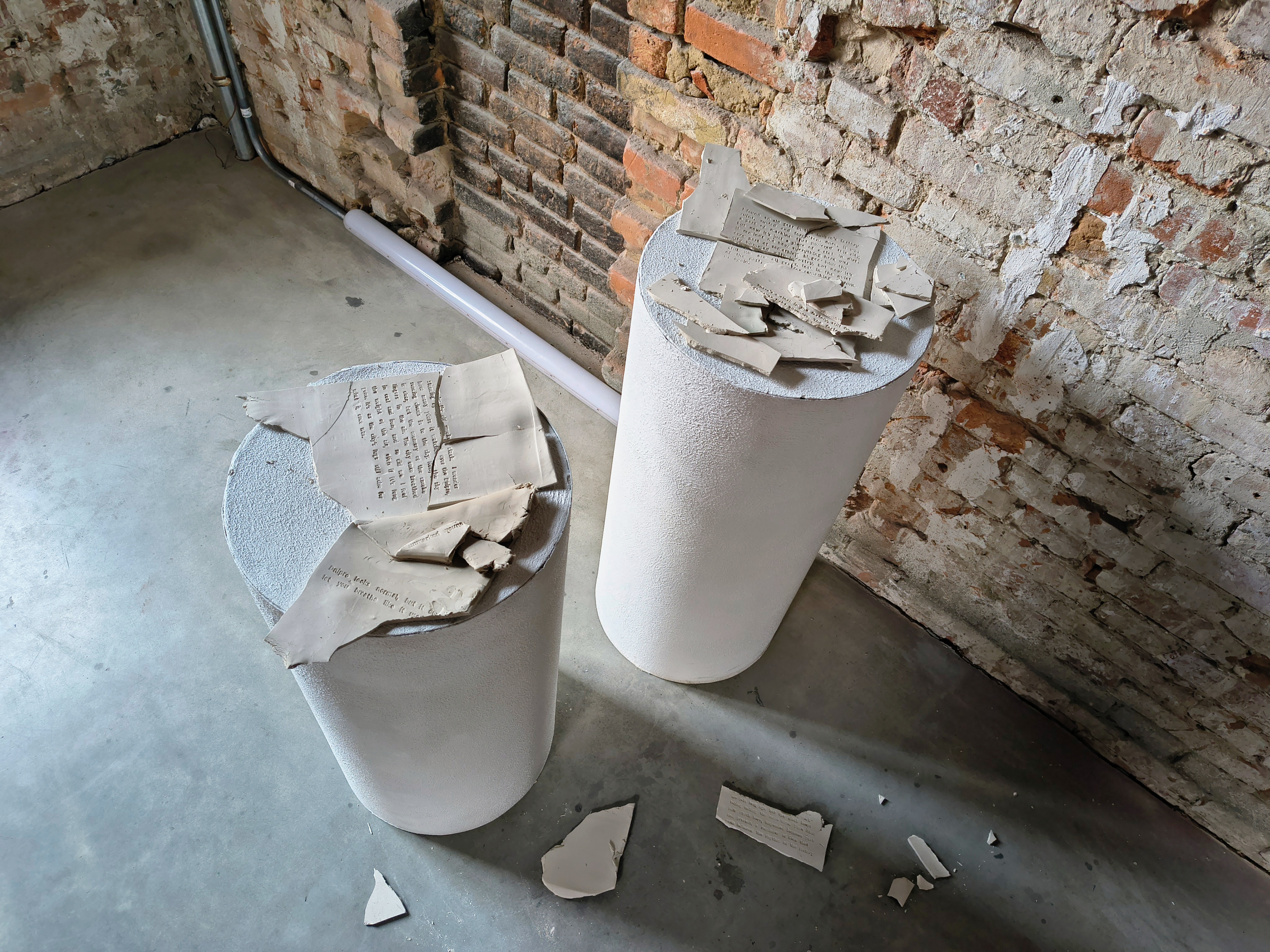
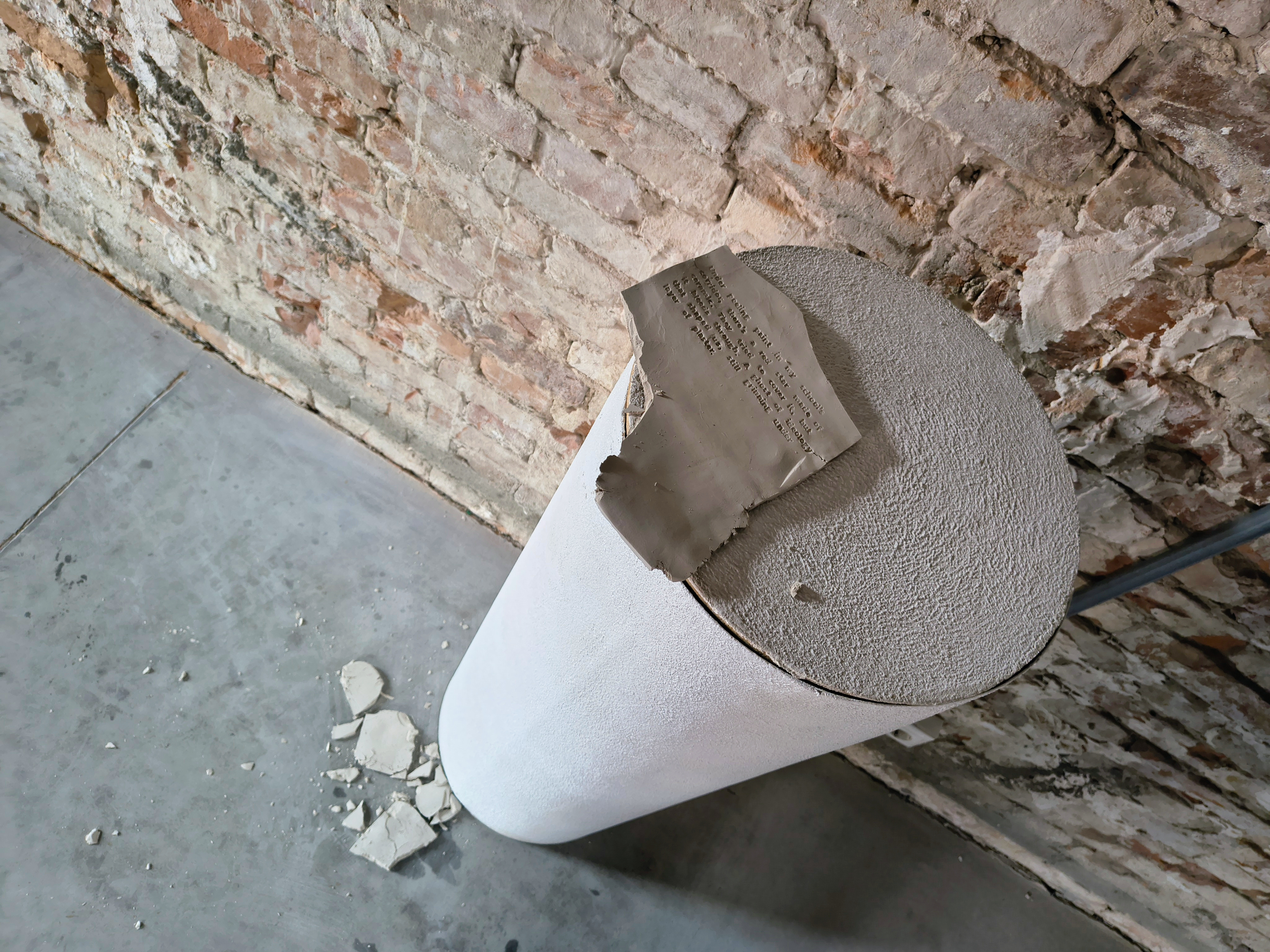
The Voice That Did Not Survive (2025, ceramic objects Hundreds of clay tablets — many broken — contain relief imprints of statements by Dnipro residents: about the city’s industrial past, Soviet colonization, and the present experience of war. This is an archive that will not survive, one that speaks precisely through its impermanence. The question is: can one speak if the medium disintegrates in one’s hands? Can memory survive as a fracture?