Projekt zrealizowany w ramach programu "Proces regeneracyjny" rezydencji artystycznych w Galerie B Frankfurter Kunsverein (Frankfurt Oder) na przełomie września i października 2025 r.
Project realized within the “Regenerative Process” artist-in-residence program at Galerie B, Frankfurter Kunstverein (Frankfurt Oder) between September and October 2025.
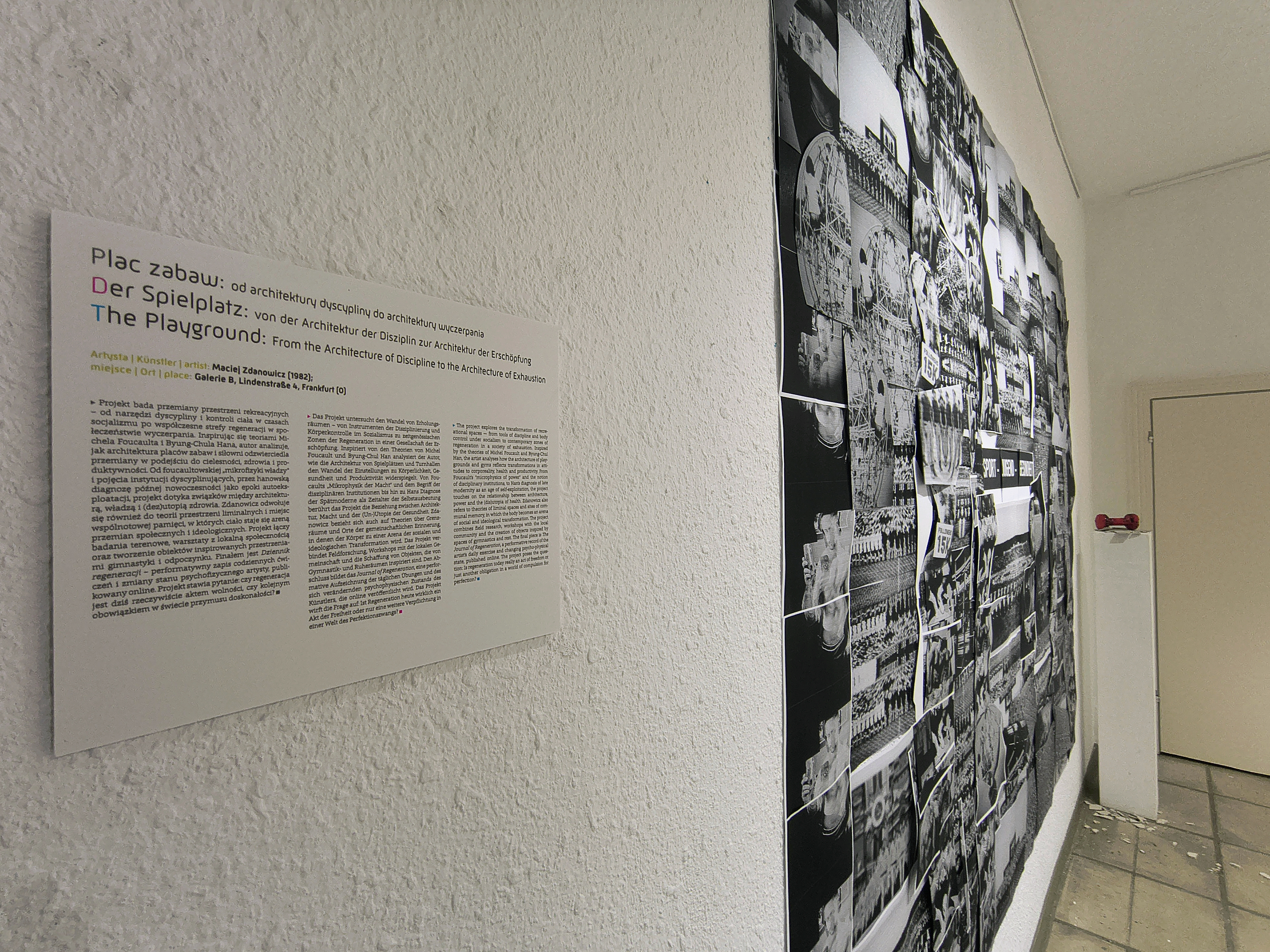
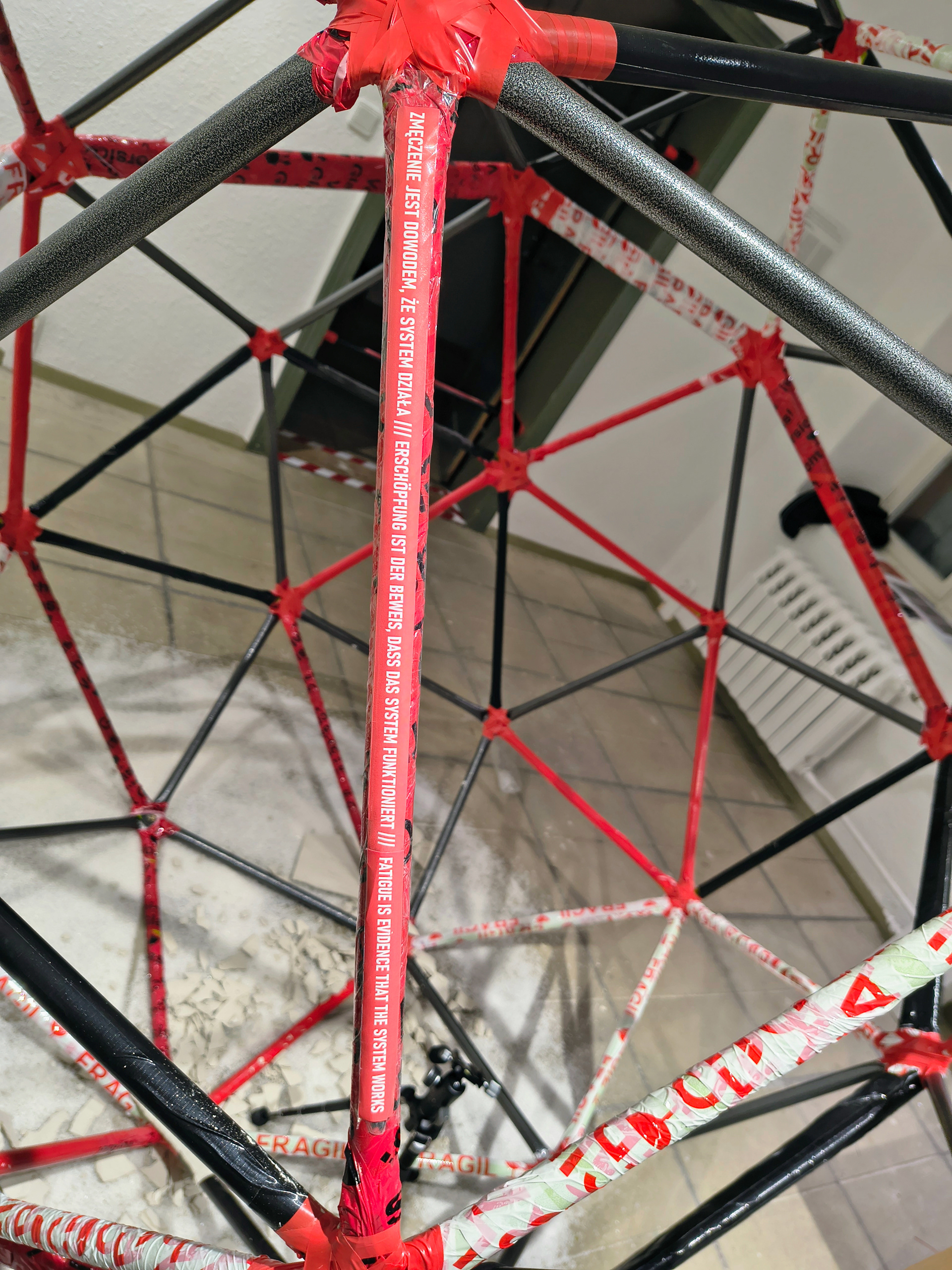
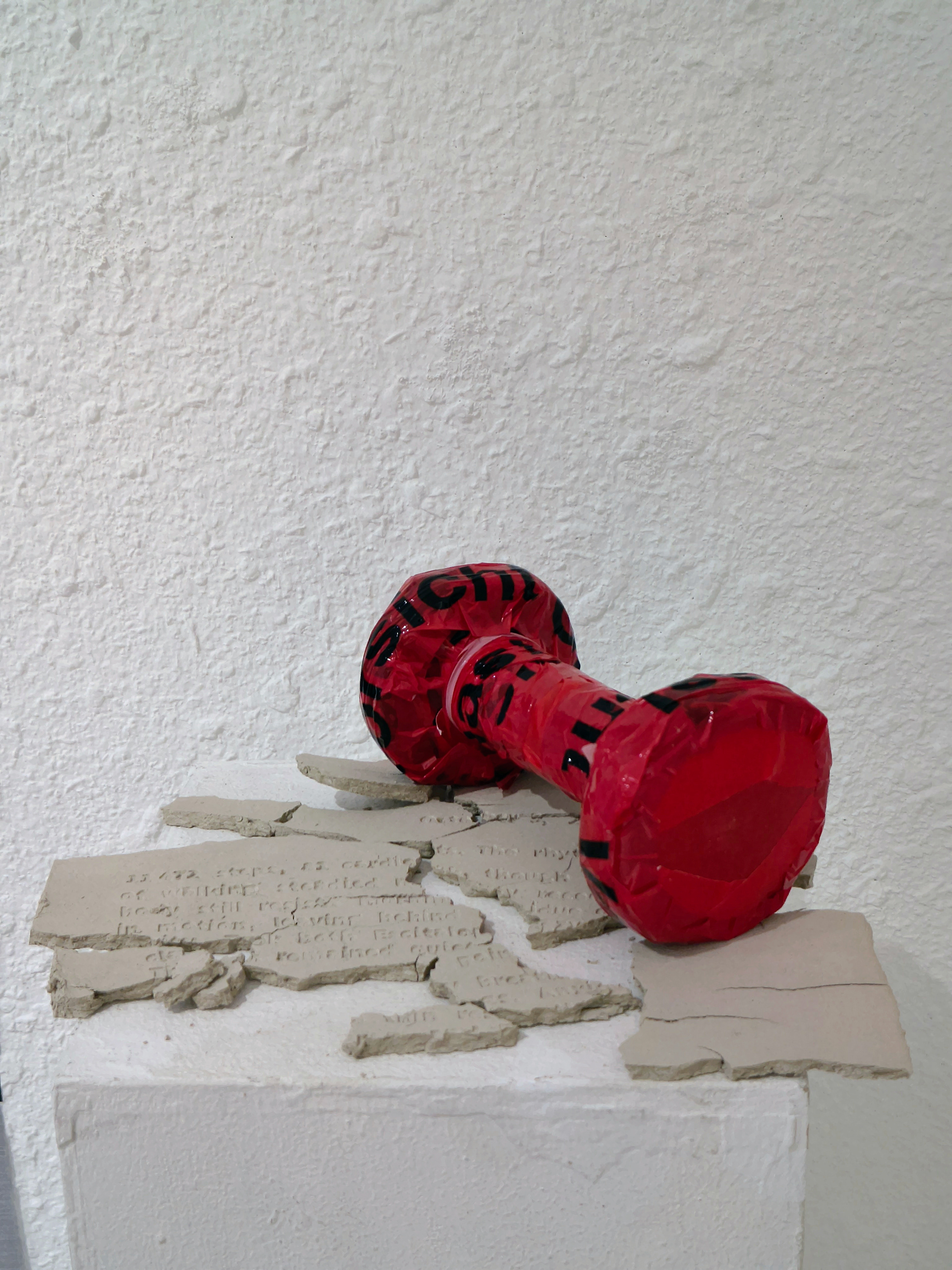
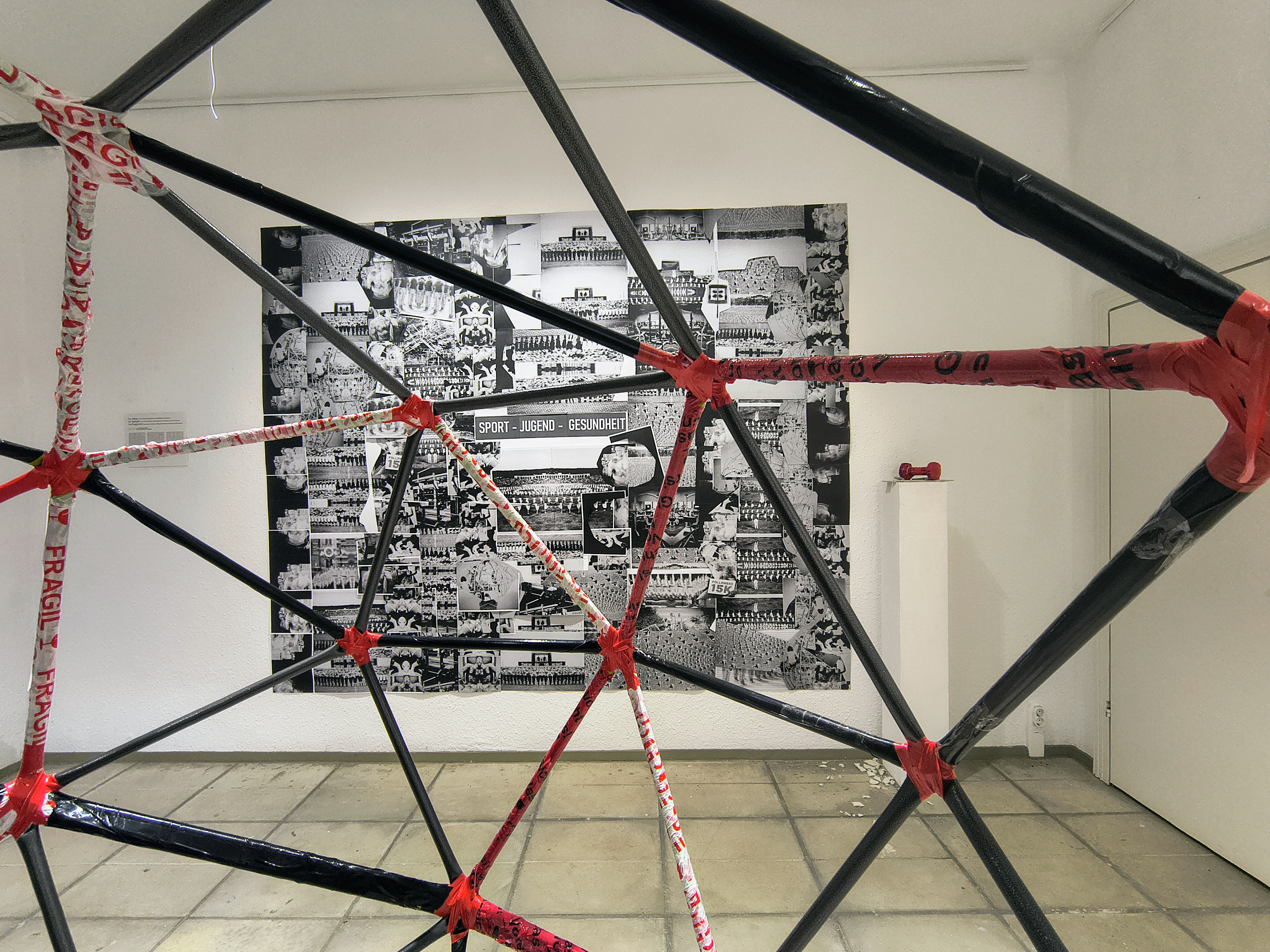
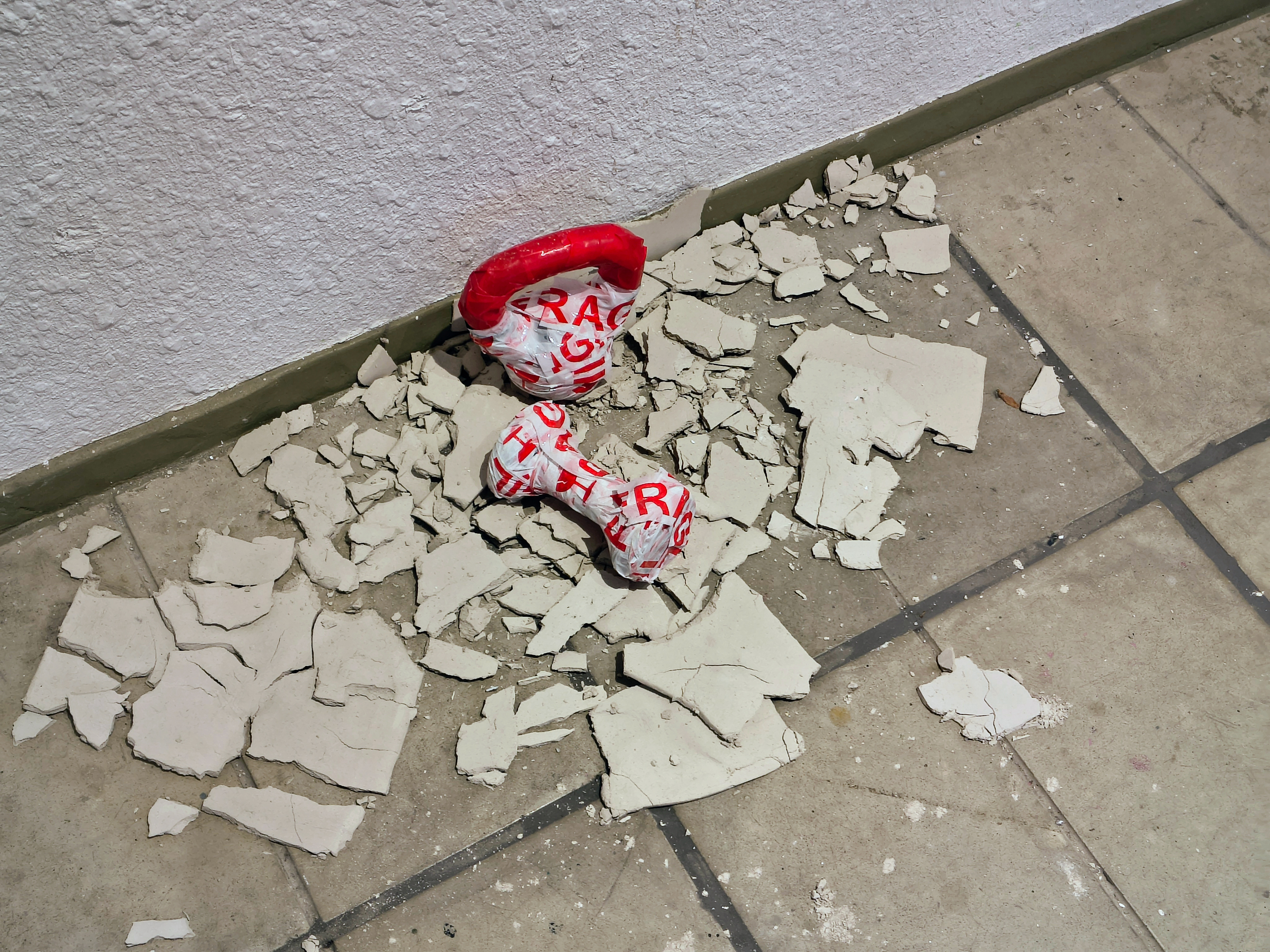
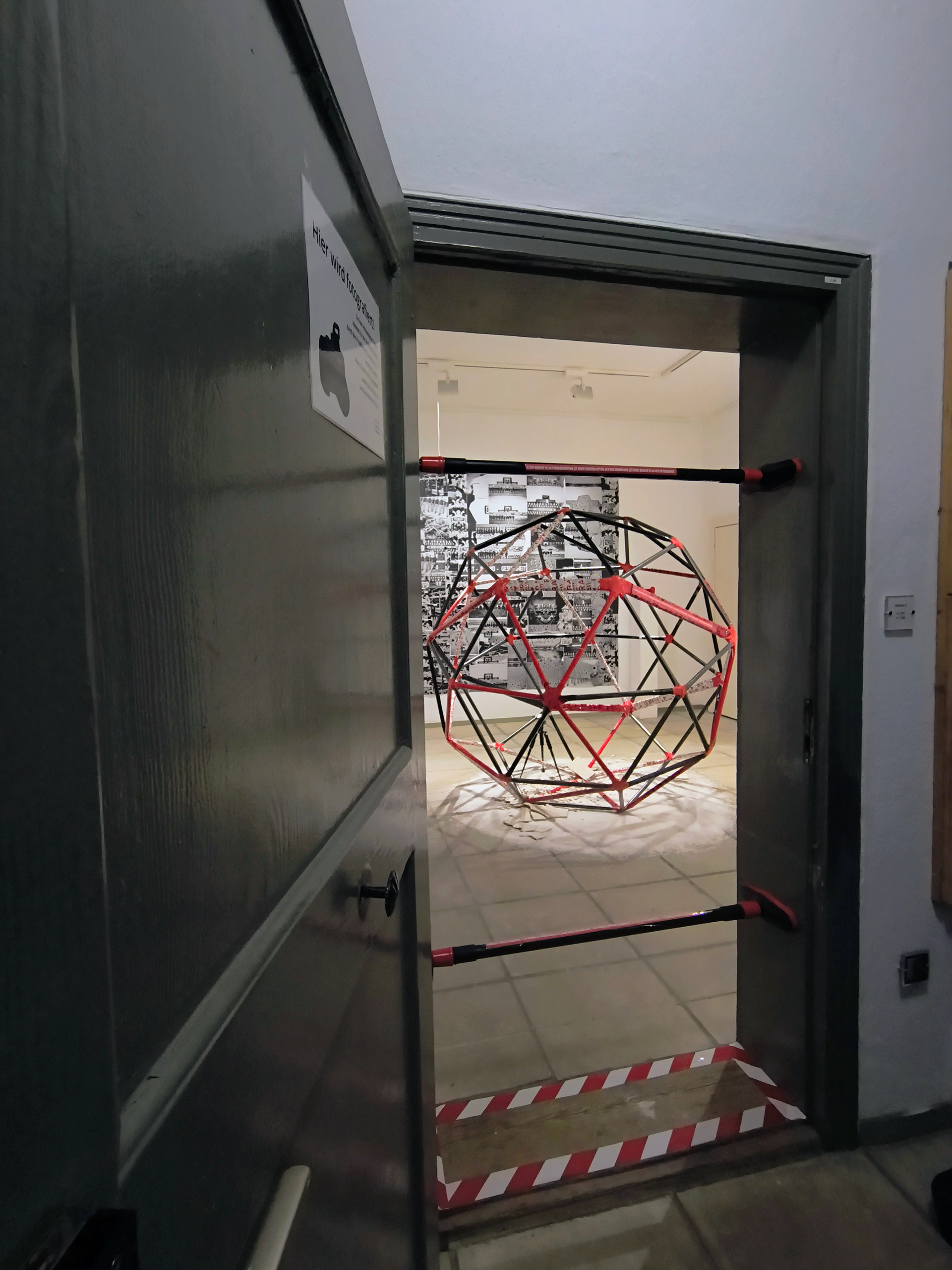
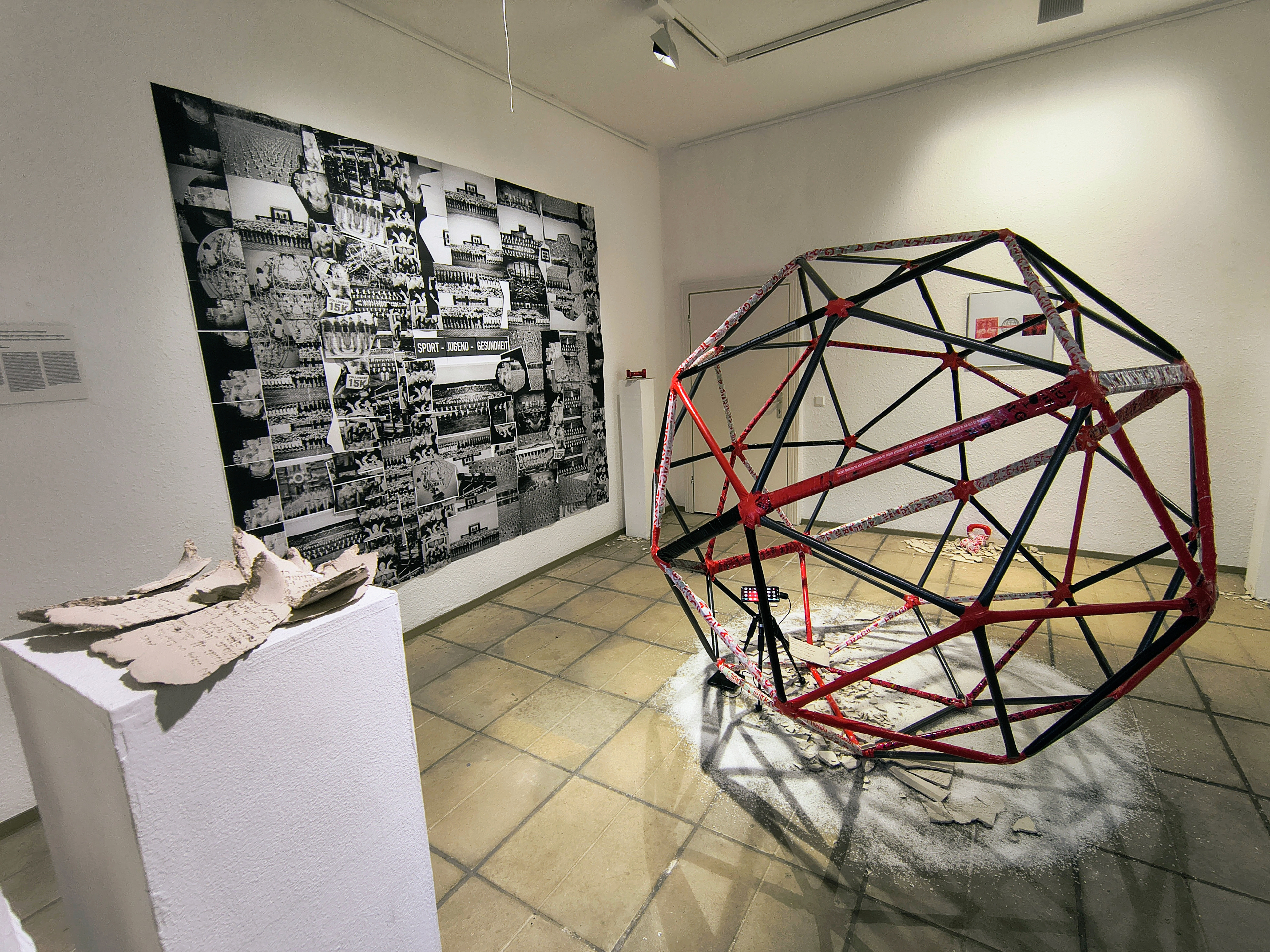
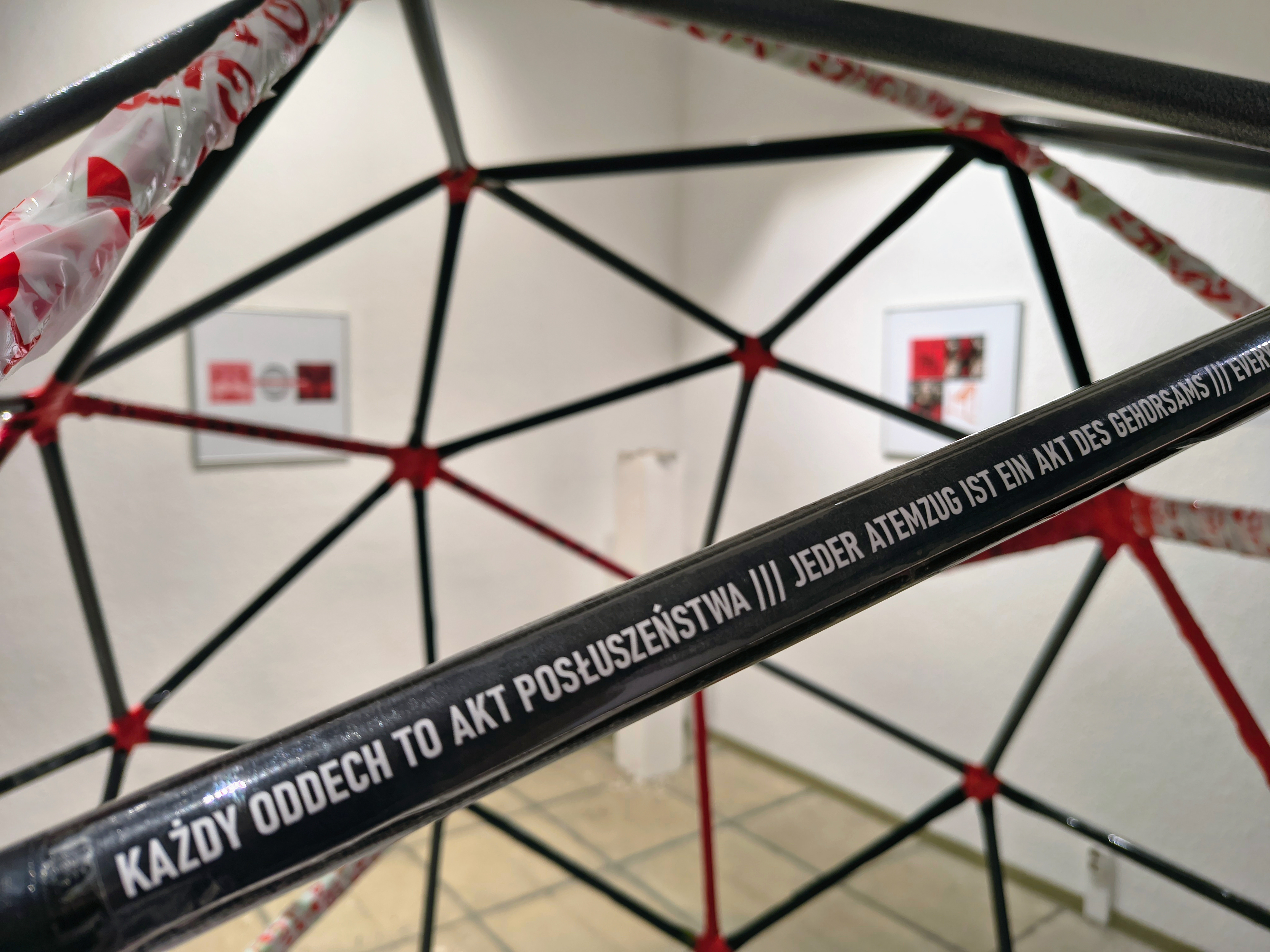
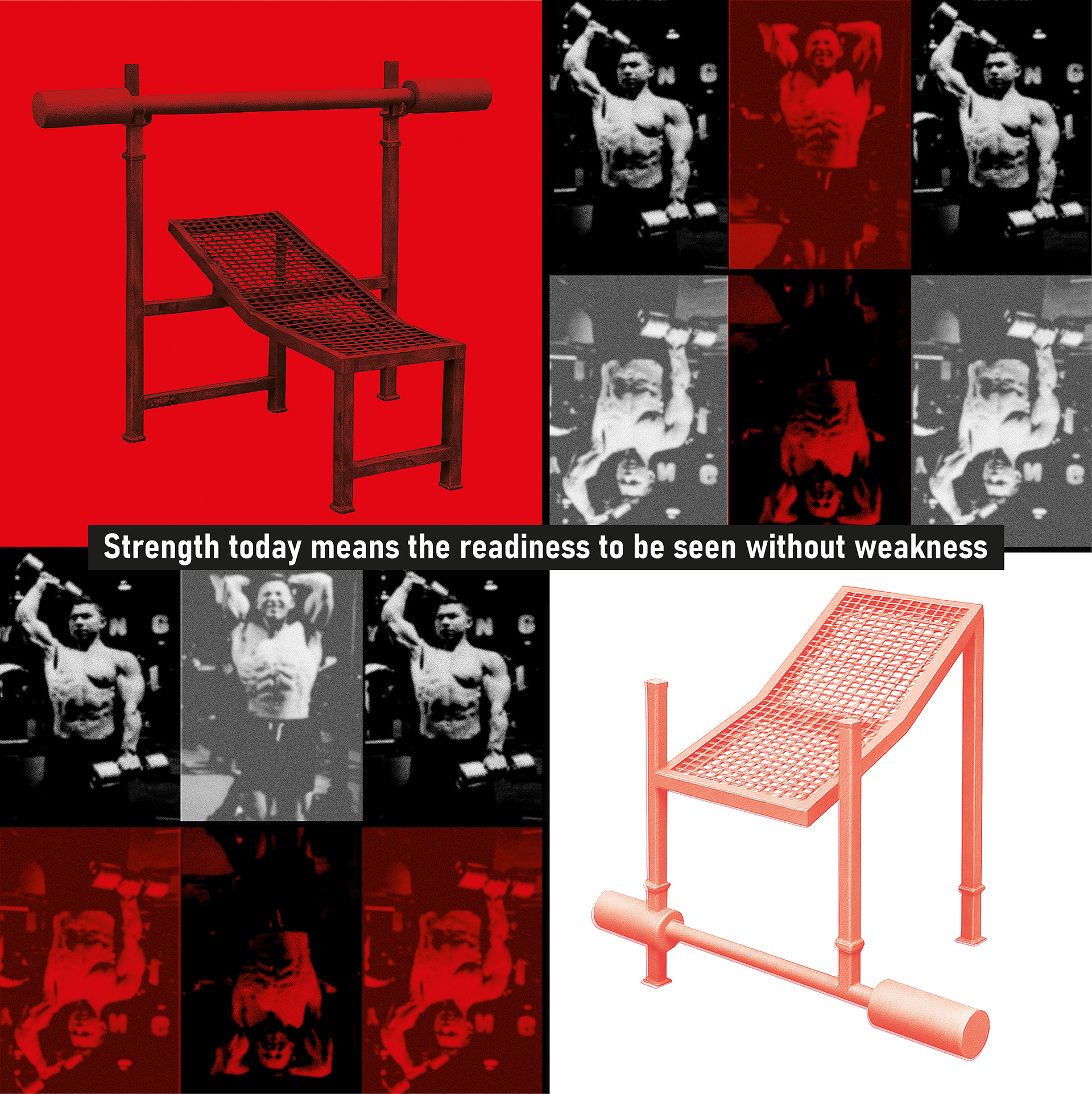
Environment "Plac zabaw: od regeneracji do zmęczenia" konstruuje napięcie między architekturą dyscypliny a współczesną kulturą zmęczenia. Na ścianach rozciąga się monumentalny fotomontaż w duchu propagandowego horror vacui – gęsty układ archiwalnych obrazów ciał, masowych ćwiczeń i haseł, które w różnych językach wzywają do sprawności, siły i zdrowia. To wizualny pejzaż biopolitycznej utopii, w której ciało zostaje podporządkowane ideologii – od totalitaryzmów XX wieku po współczesne formy samodyscypliny. W centrum przestrzeni znajduje się stalowa konstrukcja przypominająca kopułę wspinaczkową – niestabilna, asymetryczna, jakby zbudowana w stanie przeciążenia. Jej forma, jednocześnie dziecięca i opresyjna, przywodzi na myśl figurę Syzyfa – ciała, które nieustannie podejmuje wysiłek, lecz nie osiąga celu.


Punktem odniesienia dla instalacji jest stadion w Słubicach – dawny Ostmarkstadion, wzniesiony w latach 1914–1927 z inicjatywy władz Frankfurtu nad Odrą według projektu Otto Morgenschweisa, częściowo na terenie zlikwidowanego cmentarza żydowskiego. Wtedy służył jako arena sportowych defilad i manifestacji fizycznej tężyzny. Po 1945 roku, w czasach Polski Ludowej, stał się miejscem lokalnych zawodów i świąt pracy. Dziś – wciąż zachowując swoją monumentalną strukturę – znajduje się na uboczu nowoczesnych stref rekreacji: plenerowych siłowni, ścieżek biegowych i klubów fitness. Dawne miejsce zbiorowej mobilizacji ciał sąsiaduje z przestrzeniami indywidualnej samokontroli i komercyjnej troski o siebie – symptomami nowej ideologii wellness.
„Plac zabaw” jest więc opowieścią o transformacji idei ruchu: od przymusu do auto-nadzoru, od wspólnoty do samotności, od dyscypliny do samowyczerpania. W świecie, w którym regeneracja stała się obowiązkiem, a odpoczynek kolejną formą produktywności, zabawa traci niewinność, a wysiłek nie przynosi już ulgi.
„Plac zabaw” jest więc opowieścią o transformacji idei ruchu: od przymusu do auto-nadzoru, od wspólnoty do samotności, od dyscypliny do samowyczerpania. W świecie, w którym regeneracja stała się obowiązkiem, a odpoczynek kolejną formą produktywności, zabawa traci niewinność, a wysiłek nie przynosi już ulgi.

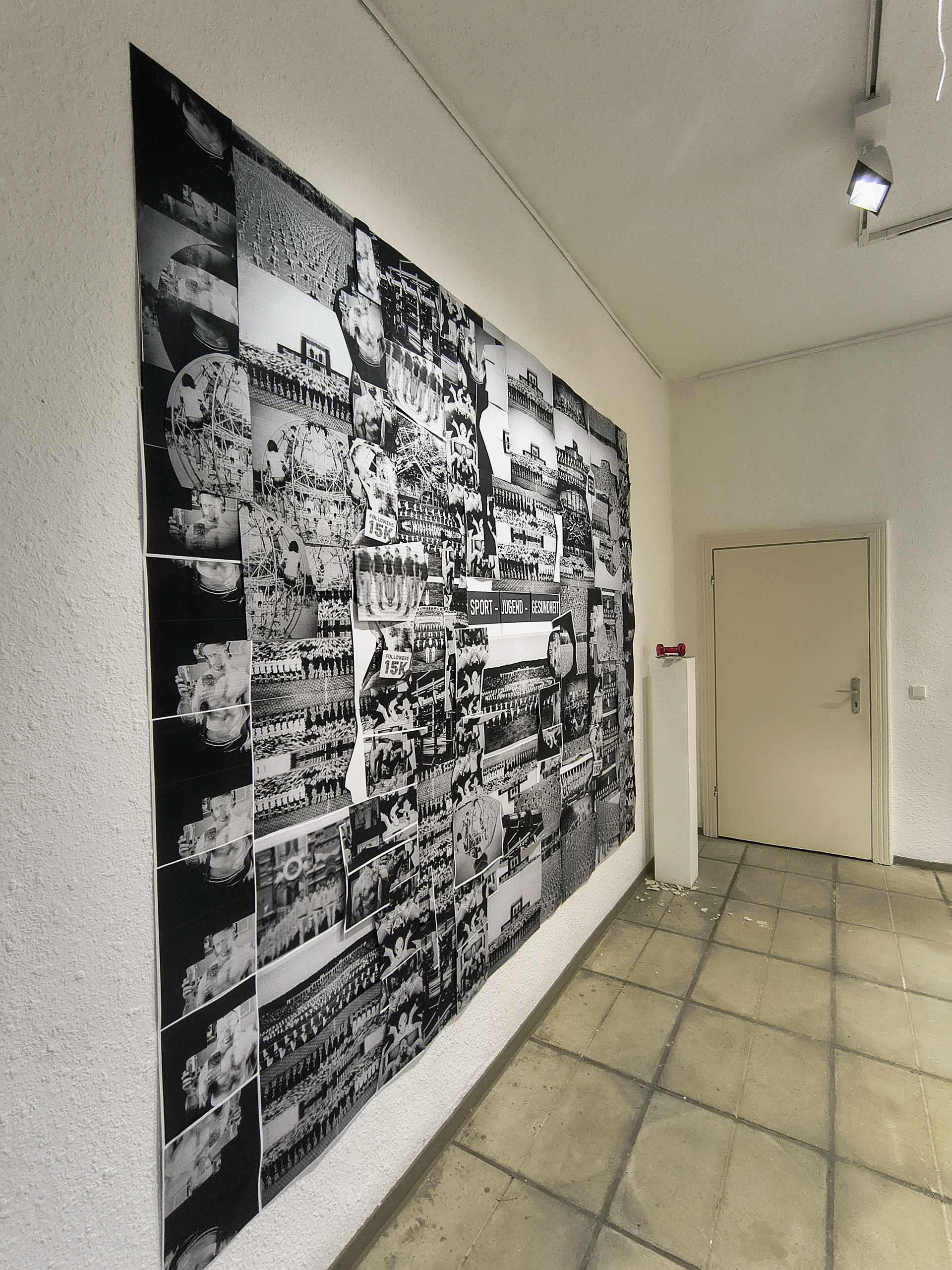
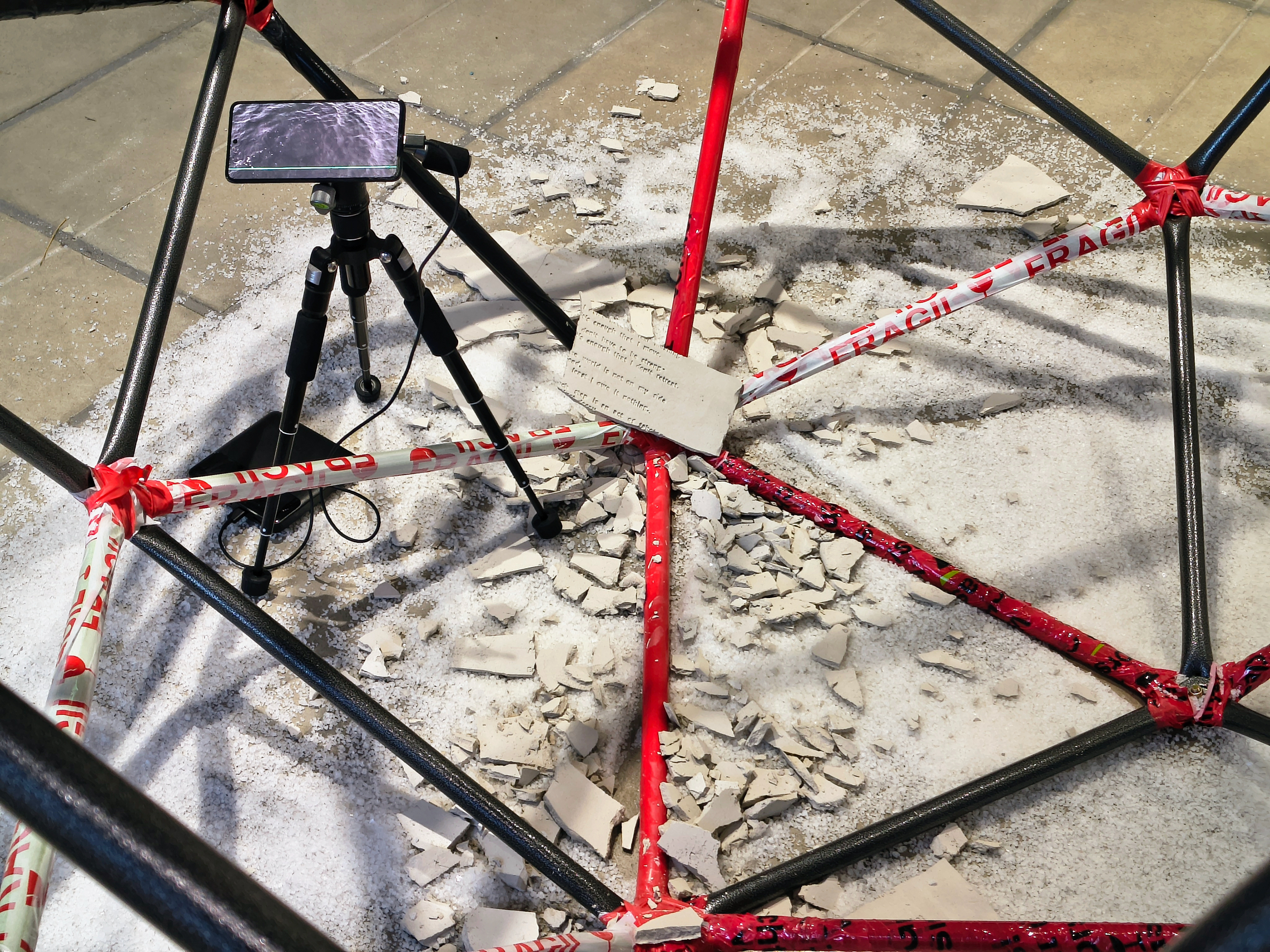
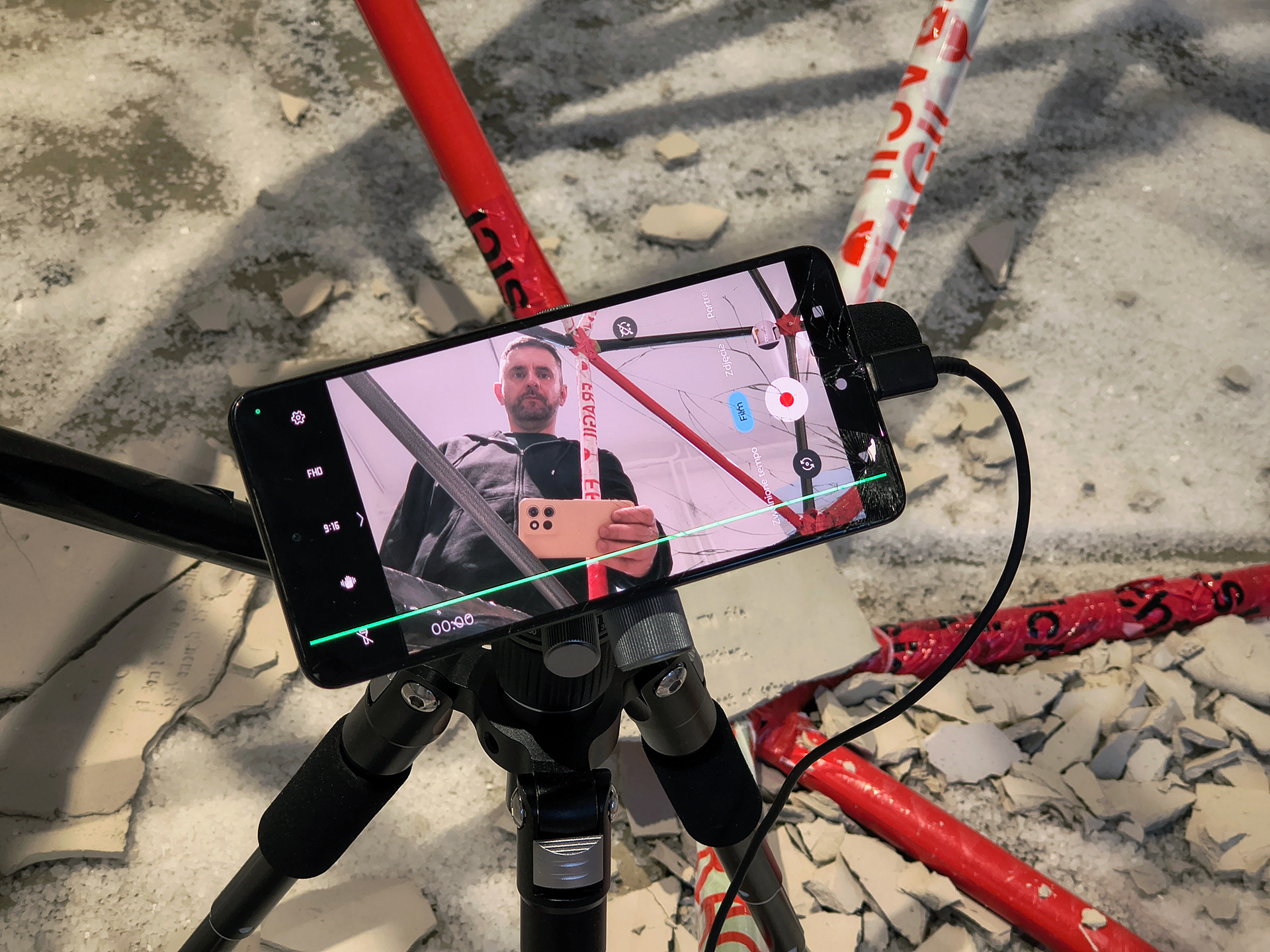
The environment titled "Playground: From Regeneration to Exhaustion" constructs a tension between the architecture of discipline and the contemporary culture of exhaustion. Across the walls unfolds a monumental photomontage in the spirit of propagandistic horror vacui-a dense constellation of archival images of bodies, mass exercises, and slogans calling for strength, vitality, and health in different languages. It forms a visual landscape of biopolitical utopia, in which the body is subordinated to ideology-from the totalitarian systems of the twentieth century to the subtle forms of today’s self-discipline. At the centre of the space stands a steel structure resembling a climbing dome—unstable, asymmetrical, seemingly built under strain. Its form, at once playful and oppressive, evokes the figure of Sisyphus: a body endlessly engaged in effort, yet unable to achieve fulfilment.
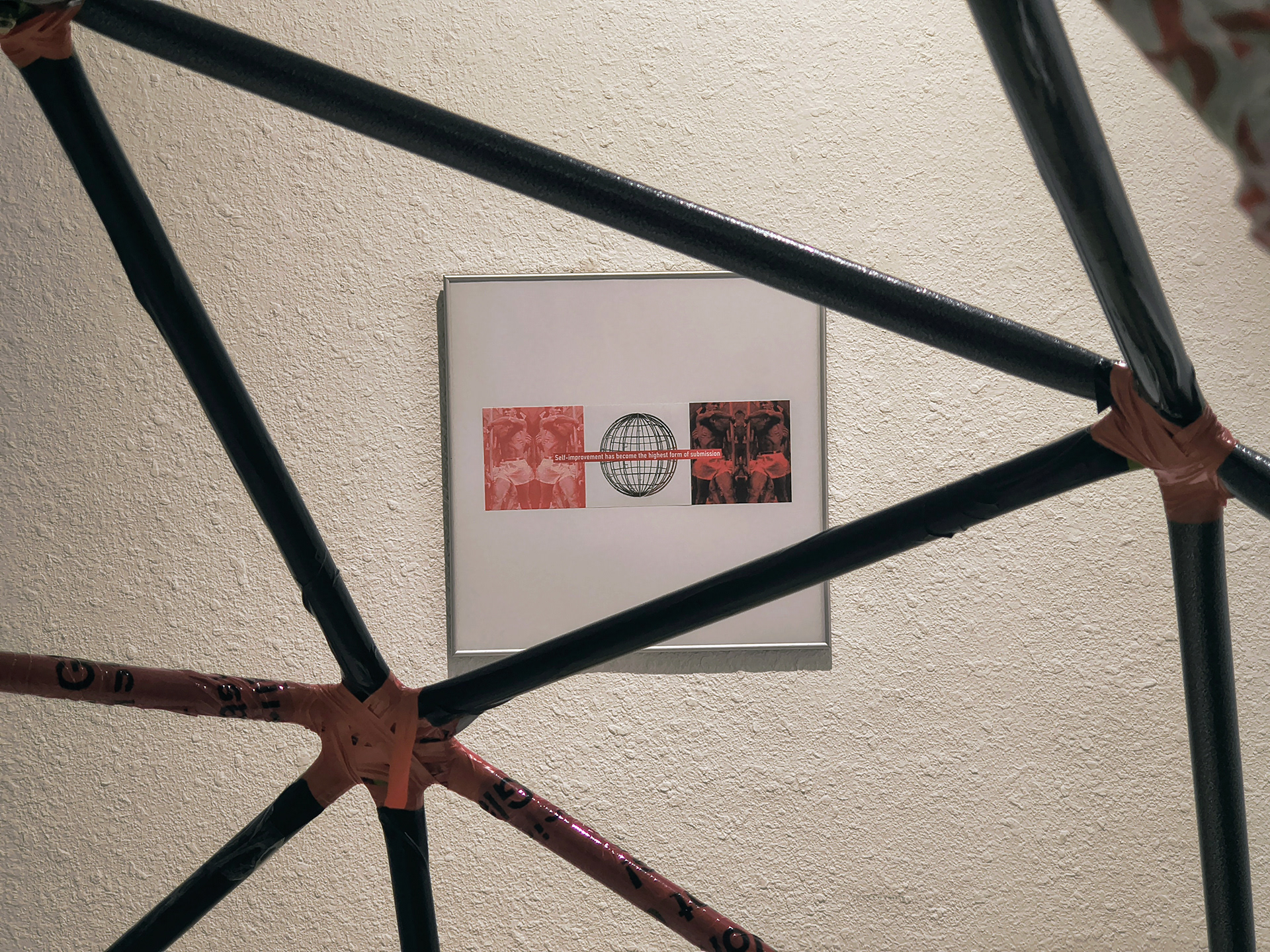
The installation takes as its point of reference the stadium in Słubice - the former Ostmarkstadion, erected between 1914 and 1927 under the administration of Frankfurt (Oder), to the design of Otto Morgenschweis, partially on the grounds of a dismantled Jewish cemetery. In the period of National Socialism, it served as an arena for parades and demonstrations of physical strength. After 1945, during the era of the Polish People’s Republic, it became a site for local competitions and workers’ festivities. Today, it still preserves its monumental structure - it stands on the periphery of new recreational zones: open-air gyms, jogging paths, and wellness clubs. The former site of collective mobilisation of bodies now neighbours spaces of individual self-control and commercialised self-care symptoms of a new wellness ideology.
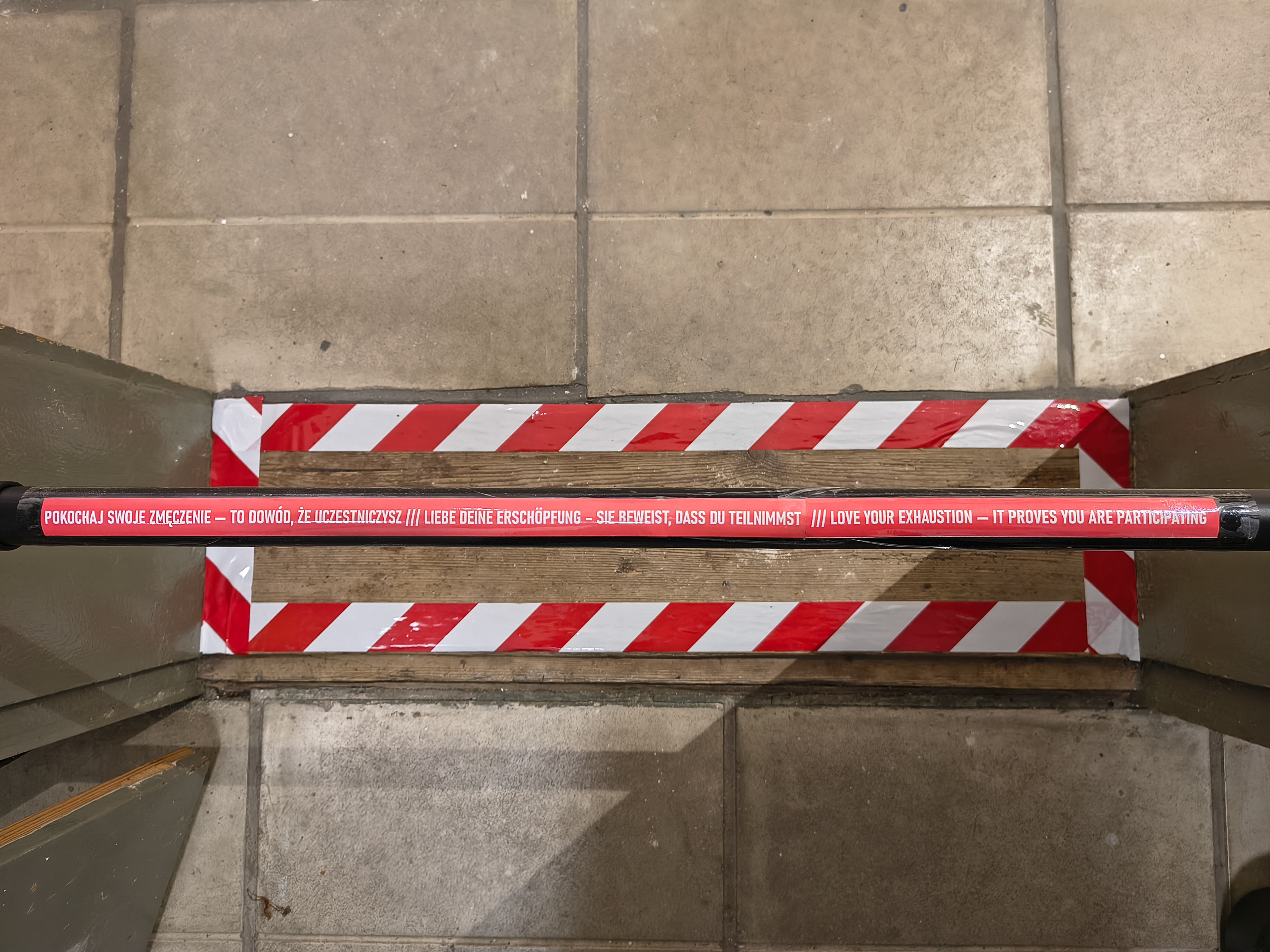
Playground is thus a reflection on the transformation of the idea of movement: from coercion to self-surveillance, from community to solitude, from discipline to self-exhaustion. In a world where regeneration has become an obligation and rest another form of productivity, play loses its innocence, and effort no longer brings relief.
Playground is thus a reflection on the transformation of the idea of movement: from coercion to self-surveillance, from community to solitude, from discipline to self-exhaustion. In a world where regeneration has become an obligation and rest another form of productivity, play loses its innocence, and effort no longer brings relief.